
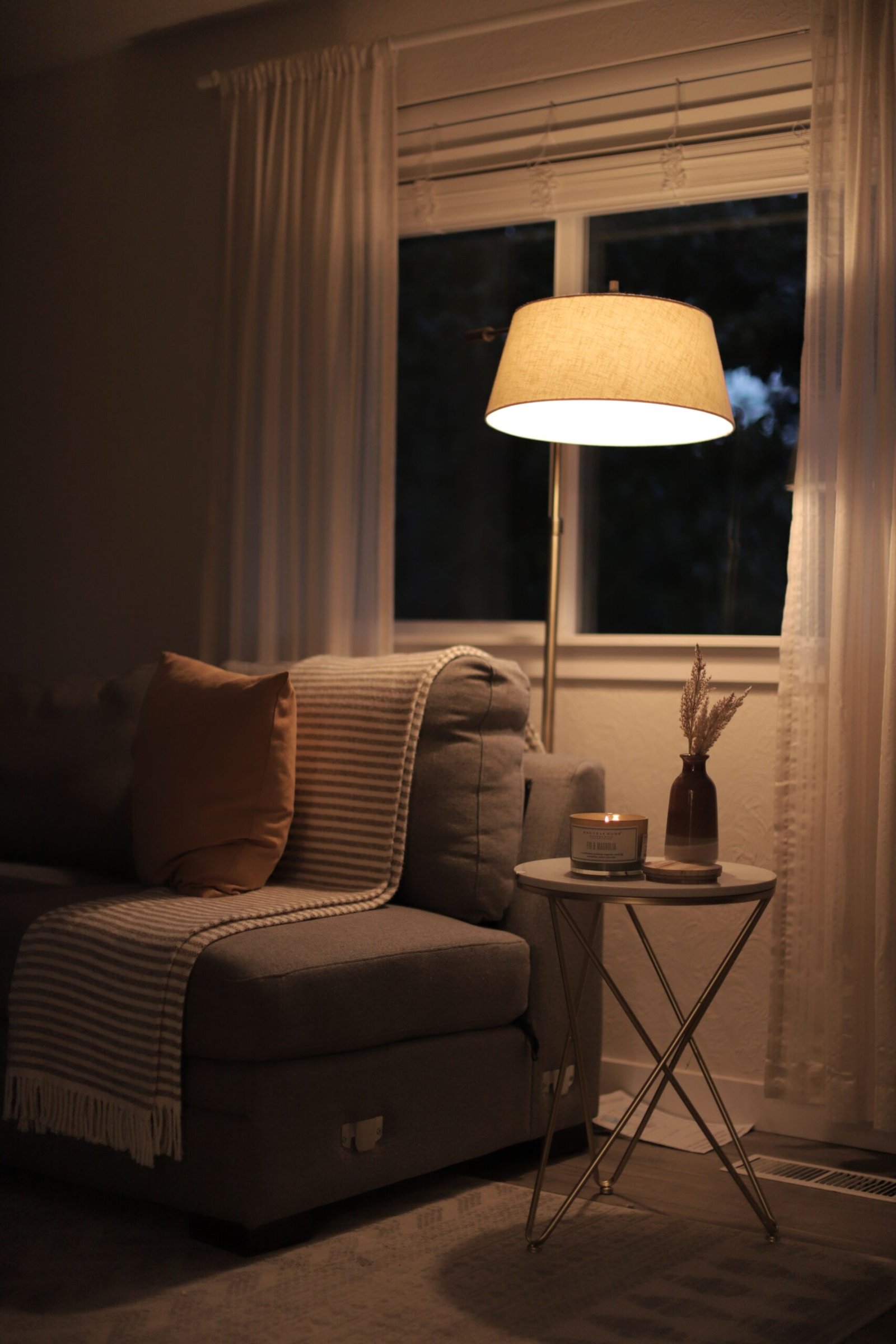
A cosy living room is not a style you buy. It is a feeling a room gives you when you walk in on a cold evening: somewhere soft to sit, warm light instead of harsh light, something warm underfoot, and the sense that the room is inviting you to stay a while. Some rooms achieve that feeling naturally, with deep seating and layers of texture. Others look perfectly smart and still feel cold, because comfort was never part of the plan.
This guide focuses on cosy living room ideas for cold evenings and everyday relaxing — not for special occasions, and not as a showroom look. The ideas here are about seating you can actually sink into, warmth built up in layers, soft surfaces, and small touches that make ordinary evenings feel a little more special. Most of them cost nothing or very little, because cosiness comes mostly from arrangement, texture, and light rather than from new purchases.
Seating You Can Actually Sink Into
Cosiness starts with seating, and the test is simple: can you sit in it for an hour without fidgeting, and would you choose it over standing? Deep seats help, because they let you tuck your legs up or lean back properly. A seat depth that forces you to sit upright with your feet flat on the floor may look tidy, but it is not relaxing. If your sofa is shallow, a large cushion behind your back or a folded throw across the seat can add the depth that is missing.
Armrests matter more than people expect. A low, soft armrest you can lean on or rest a book against makes a seat feel enveloping; a hard, high armrest makes it feel like a bench. Similarly, a chair with a slightly reclined back feels more restful than a chair designed to keep you bolt upright. None of this means your seating has to be shapeless. A well-made sofa can be both smart and sinkable — the trick is choosing (or arranging) for comfort first and tidiness second.
If your living room currently feels more like a waiting room than a retreat, start here rather than with decoration. Sit in each seat for ten minutes and notice what is uncomfortable: a cushion that is too firm, a back that is too upright, an armrest at the wrong height, a seat that faces a draught. Small fixes — a different cushion, a footstool, a throw over the arm — often make more difference than a new sofa, and they tell you what you actually need if you do eventually replace anything.
Layers of Warmth: Textiles and Light
Cosiness is built in layers, and textiles are the easiest layer to add. A throw draped over the arm of a sofa, a second throw folded over the back of a chair, cushions in different textures rather than a single matching set — these are the details that make a room look and feel warm. The key word is texture: a wool throw, a velvet cushion, a knitted cushion, and a linen cushion together create more warmth than four identical cushions in the same fabric, because the eye reads variety of texture as softness.
Colour plays a supporting role. Warm neutrals, soft earth tones, and muted reds, oranges, and deep greens all read as warm, while stark white and icy grey can read as cold, however soft the fabric is. You do not need to repaint the room to benefit from this: a warm-toned throw and cushions against a neutral sofa shift the whole feeling of the seating area. If you want to go further, the principles of choosing and layering textiles — rug size, throw layering, cushion numbers — are covered in detail in Cosy Textiles Guide: Rugs, Throws and Cushions That Pull a Room Together.
Light is the other layer, and it is at least as important as textiles. A single bright overhead light flattens a room and makes it feel exposed; several smaller, warmer light sources make it feel sheltered. Table lamps, floor lamps, and candles (real or flameless, according to your household) each create pools of warm light that draw people together and soften the edges of a room. In the evening, the aim is to be able to see comfortably without the room feeling lit up like an office.
The practical version of this is simple: put lamps where people actually sit, not just where they look good in a photograph. A floor lamp beside a favourite chair, a table lamp on a side table within reach of the sofa, and a low light near the television area will do more for cosiness than a single statement pendant in the centre of the ceiling. For a fuller explanation of how ambient, task, and accent light work together, see How to Layer Lighting to Make Any Room Feel Cosy.
Quick warmth layers to try this evening
- Drape a throw over the sofa arm nearest the door, so it is the first soft thing you see when you walk in.
- Swap one bright overhead bulb for lamps at seating height, and notice how the room’s mood changes.
- Add a cushion in a different texture — wool, velvet, or knit — rather than another cushion in a fabric you already have.
- Put a small lamp or candle on a side table, so the seating area has light at more than one height.
- Fold a second throw over the back of a chair, so there is always a warm layer within reach.
Soft Surfaces Underfoot
What is underfoot affects how a room feels more than most people realise. A hard floor with no rug can make a room feel cold even when the heating is on, because the eye associates bare, reflective surfaces with emptiness, and because feet notice the difference. A rug under the seating area changes both: it softens the look of the room, warms the floor, and helps sound feel less echoey, which in itself makes a room feel more enclosed and comfortable.
Size matters here as it does everywhere with rugs. A rug that is too small floats in the middle of the floor and makes the seating look scattered; a rug large enough to sit under the front legs of the sofa and chairs pulls the group together and defines the cosy zone. If a large rug is not practical, layering can help: a larger, flat rug underneath and a smaller, softer rug on top adds texture and warmth without the cost of one very large piece.
Texture matters underfoot as well. A deep-pile or wool rug feels warm and inviting; a thin, flat rug may look smart but will not add much comfort. In a room that is used barefoot or in socks, this is worth spending attention on. And if you have hard floors throughout, a rug in the seating area plus a runner or a second rug near a reading chair extends the soft feeling beyond a single spot.
Do not forget the smaller soft surfaces: a footstool or ottoman with a soft top, a pouffe that can be pulled close to a chair, and cushions on the floor for households where people like to sit low. These are the pieces that make a room feel lived in rather than arranged, because they invite informal, relaxed postures that a formal seating arrangement does not.
Small Touches That Make Evenings Feel Special
Once seating, textiles, light, and flooring are in place, cosiness comes from small, repeatable touches rather than from decoration. A tray on the coffee table with a teapot or a couple of mugs ready to use, a basket of throws by the sofa so nobody has to go looking for one, a book left open on a side table — these are signs that a room is used and enjoyed, and they make the room feel welcoming in a way that a perfectly tidy, empty surface does not.
Seasonal touches help as well, without requiring a full redecoration. In winter, heavier throws, deeper colours, and more candlelight suit the season; in summer, lighter throws and brighter cushions keep the same room feeling cosy without feeling heavy. The idea is to adjust the layers, not to replace the room. A basket that holds winter throws in summer and summer throws in winter makes the swap easy, and keeps the off-season layers clean and ready.
Finally, cosiness is partly about what is not in the room. A living room full of clutter, paperwork, and things waiting to be put away elsewhere does not feel relaxing, however soft the sofa is. A quick evening reset — clearing the coffee table, folding the throws, putting remotes and books back in their places — takes a few minutes and makes the room feel ready for relaxing rather than reminding you of chores. This is a habit, not a purchase, and it is one of the most reliable ways to keep a cosy room feeling cosy.
The same thinking applies beyond the living room: a bedroom that is calm and uncluttered, with soft bedding and warm evening light, extends the feeling of the evening into the night. For that side of the house, Calm Bedroom Ideas for Better Sleep and Slower Mornings covers colour, light, and layout for winding down.
FAQ: Cosy Living Rooms
Can a modern, minimalist living room still feel cosy?
Yes, if warmth is built in through texture and light rather than through clutter. A minimalist room with a deep sofa, a wool throw, a warm-toned rug, and lamps at seating height can feel just as cosy as a heavily decorated room. Cosiness comes from softness and warmth, not from the number of objects on display.
What is the cheapest way to make a living room cosier?
Change the lighting first: turn off the overhead light and use lamps instead. Then add one warm throw and one textured cushion to the main seat. Those three changes cost little and transform how a room feels in the evening, which is when cosiness matters most.
Do dark colours make a room cosier or smaller?
Both, to a degree. A deep, warm colour on one wall or in textiles can make a room feel more enclosed and intimate, which reads as cosy. Painting every wall dark in a small, poorly lit room can make it feel cramped instead. The safer route is to keep walls light or neutral and add depth through cushions, throws, and a rug.
How do I keep a cosy living room from looking messy?
Give every soft layer a home: a basket for throws, a tray for remotes and small items, and a regular place for cushions when they are not in use. Cosiness and tidiness are not opposites — a room feels cosiest when its soft layers are arranged rather than scattered, and a two-minute reset each evening keeps it that way.
Conclusion
A cosy living room is built from comfort, not from decoration: seating you can sink into, layers of warm textiles and soft light, something soft underfoot, and small touches that make ordinary evenings feel cared for. Start with the seat you use most, add warmth in layers, and let the room’s cosiness come from how it is used rather than how it looks in a photograph. A room that invites you to sit down, put your feet up, and stay a while is doing its job — and on a cold evening, that is worth more than any amount of style on its own.