
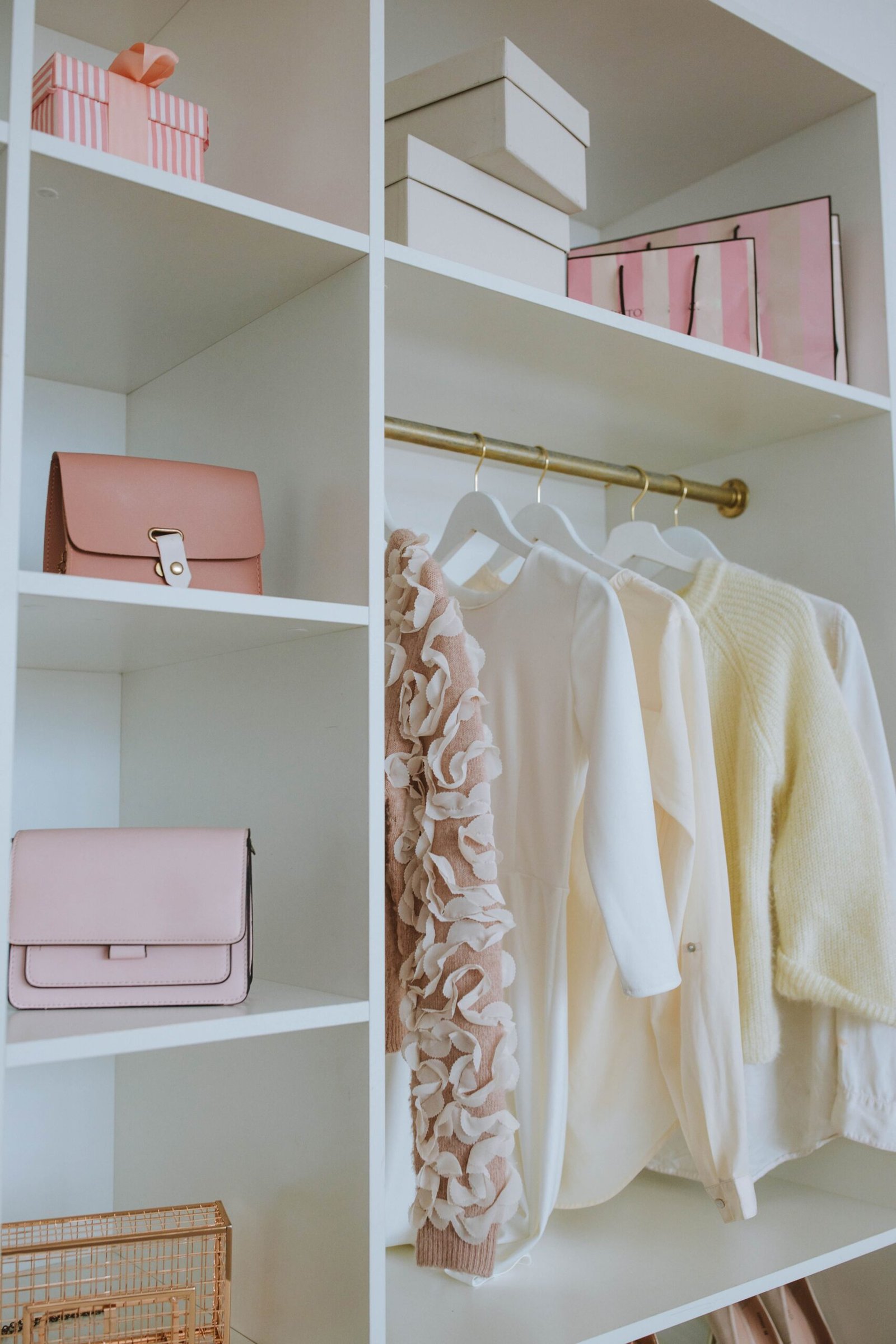
A small closet without built-ins can still work well. The problem is rarely the size alone; it is that a single rod and a single shelf waste most of the space, leaving clothes crammed at one height while the top and bottom of the closet sit empty. With a few inexpensive additions — a second rod, shelf dividers, boxes, and door storage — the same closet can hold more, stay tidy, and make daily outfits easy to find.
This guide organises a small closet by frequency of use: daily clothes where they are easiest to reach, occasional items higher or lower, and out-of-season clothes elsewhere. It assumes no fitted joinery, no renovation, and a budget spent on a few practical pieces rather than a whole new system.
Empty and Sort Before You Organise
Start by taking everything out. It sounds drastic for a small closet, but it is the only way to see what you actually own, what fits, and what is taking up space for no reason. Sort clothes into keep, relocate, and let go, using the same simple rule as any decluttering session: if you have not worn it in a year, if it no longer fits or is damaged beyond repair, or if you keep it only out of guilt, it is a candidate for letting go.
While the closet is empty, clean it, check the rod and shelf for sturdiness, and measure the space: width, depth, height, and the distance from the rod to the floor. Those measurements decide what will actually fit — a second rod needs enough clearance for clothes to hang without bunching on the floor, and shelf dividers need to match the shelf depth. A quick sketch with measurements prevents buying pieces that look right online but do not fit your closet.
Sorting by category comes next: tops together, bottoms together, dresses and long items together, and accessories grouped separately. Within each category, sorting by colour or by how often you wear an item makes the closet even easier to use, though this level of order is optional — the main gain comes simply from grouping like with like, so you are no longer searching a mixed rail for a single shirt. This is not fussiness; it is what makes the closet usable afterwards. A closet organised by category lets you see what you have at a glance, find an outfit quickly, and notice duplicates or gaps, rather than hunting through a mixed rail every morning.
Double Hanging and Shelf Dividers
The biggest gain in a small closet usually comes from double hanging: adding a second rod below the first, so shirts and tops hang above and trousers or skirts hang below. This roughly doubles hanging space without any building work, provided the lower rod leaves enough clearance above the floor for the clothes hanging on it. Short items — shirts, jackets, folded trousers — suit double hanging; long dresses and coats still need a full-height section, so keep one part of the closet single-height for them.
Shelf dividers are the equivalent trick for the shelf above the rod. Without dividers, stacks of jumpers and T-shirts topple sideways and become a single leaning pile. Simple dividers — metal, plastic, or fabric — keep stacks upright and separated by category, so taking one item does not collapse the whole stack. Keep stacks low, no more than about five or six items, so they stay stable and visible.
Boxes and baskets earn their place on high shelves and on the closet floor. Clear or labelled boxes for accessories, scarves, belts, and out-of-season small items keep those categories contained and easy to retrieve, while open baskets on the floor hold shoes or bags without them spreading. Label boxes plainly — “winter scarves” beats a decorative label nobody can read — and keep the labels facing out. The same box-and-label discipline helps in bedrooms generally, and Bedroom Storage Ideas for Rooms Without Built-In Wardrobes covers the wider bedroom.
Use the Door and the Floor
The inside of the closet door is wasted space in most homes, and it is ideal for flat, light items: an over-door rack for scarves, belts, and jewellery; hooks for bags or tomorrow’s outfit; or a clear pocket organiser for small accessories. Door storage keeps these items visible and accessible without taking rail or shelf space, and it costs very little. Check that the door still closes comfortably with the organiser in place, and avoid overloading it so the door does not sag.
The floor of the closet is often the messiest area, because shoes, bags, and anything without a home ends up there. A low shoe rack, a couple of baskets, or a small shelf unit on the floor gives that area structure. Shoes should be limited to the pairs actually worn regularly; the rest belong elsewhere, just as in a hallway. A tidy closet floor makes the whole closet feel larger, because the eye is not met by a jumble at the bottom every time the door opens.
- Door: over-door rack or hooks for scarves, belts, bags, and tomorrow’s outfit.
- Floor: a low rack or baskets for daily shoes and bags only.
- High shelf: labelled boxes for out-of-season and occasional items.
- Rod: double hanging for short items, one full-height section for long items.
Vertical space between the rod and the floor is also worth using: hanging organisers with shelves, suspended from the rod, create a column of small shelves for folded items, underwear, or accessories. They are inexpensive, removable, and particularly useful in rented homes where nothing can be fixed to the walls.
Another often-overlooked area is the top of the closet, above the main shelf. If there is space there, it suits large, light, rarely used items: out-of-season hats, spare bedding, or a box of occasion wear. Keep those items in a closed box or bag so they do not gather dust or look untidy from below, and label the box clearly so you do not have to pull it down to check what is inside. The same principle applies to the gap behind the door when it opens: a narrow space there can hold a slim shoe rack or a tall laundry basket, provided it does not block the door’s swing. Using these forgotten corners is what separates a closet that merely holds clothes from one that genuinely works, because it spreads storage across the whole volume of the closet rather than cramming everything onto one rod and one shelf.
Keep Daily Clothes at Eye Level
The final principle is frequency: the clothes you wear most should be the easiest to reach. Daily work and everyday clothes belong at eye level, on the main rod, where they can be seen and grabbed without stretching or crouching. Occasional clothes — formal wear, holiday clothes — go higher or to the side, and out-of-season clothes go in labelled boxes on the top shelf or elsewhere in the home.
This arrangement also makes laundry easier. When clean clothes return to the closet, they go back to their category and their level, rather than being draped over the nearest rail. A small habit — putting clothes away properly on laundry day, rather than in a chair pile — does more for closet tidiness than any organiser, and it takes only a few extra minutes.
Review the closet seasonally, just as you would any storage. At each season change, move out-of-season clothes into boxes and bring the new season’s clothes to eye level, checking for anything damaged, unworn, or duplicated as you go. A closet reviewed twice a year stays organised with little effort, while a closet never reviewed slowly fills until it bursts. If the closet is overflowing, the wider answer is usually fewer clothes, not more storage, and Decluttering Room by Room: A Practical Starter Plan is the place to start, while small-bedroom layouts that make room for storage are covered in Small Bedroom Layout Ideas That Make the Most of Every Wall.
FAQ: Organizing a Small Closet
What is the best first upgrade for a small closet?
Double hanging: a second rod below the first roughly doubles hanging space for short items, without any building work. Keep one full-height section for long dresses and coats.
How do I stop shelf stacks from toppling?
Use shelf dividers to keep stacks upright and separated by category, and keep stacks low — about five or six items — so taking one does not collapse the rest.
Where should out-of-season clothes go?
In labelled boxes on the top shelf or elsewhere in the home, not on the main rod. Seasonal swaps keep daily clothes at eye level and the closet manageable.
Can I organise a closet in a rented home?
Yes. Double rods, shelf dividers, hanging organisers, and over-door racks are all removable and need no drilling or fitted joinery.
Conclusion
A small closet without built-ins works when it is emptied and sorted first, organised by frequency, and fitted with a few practical pieces: double hanging, shelf dividers, door storage, and labelled boxes. The closet does not need to be bigger; it needs to be used better.
Start by taking everything out and sorting it, then add a second rod for short items. That one change, plus daily clothes at eye level, will make the closet feel like a different space.