Kids’ rooms change fast. Interests shift, sizes change, toys and books come and go, and a storage system built for one age can feel wrong within a year or two. The most useful kids’ storage is therefore flexible: low enough for children to reach and use themselves, adjustable rather than fixed to one theme, and designed for rotation rather than display of everything at once. Storage that grows with a child also teaches independence, because a child who can reach, use, and tidy their own things is a child who will do so far more often.
This guide covers storage that lasts: reachable storage children can actually use, flexible systems over fixed themes, rotation of toys and books, and planning for growth rather than just for today. It assumes no major renovation and no new system every year.
Storage Children Can Reach and Use
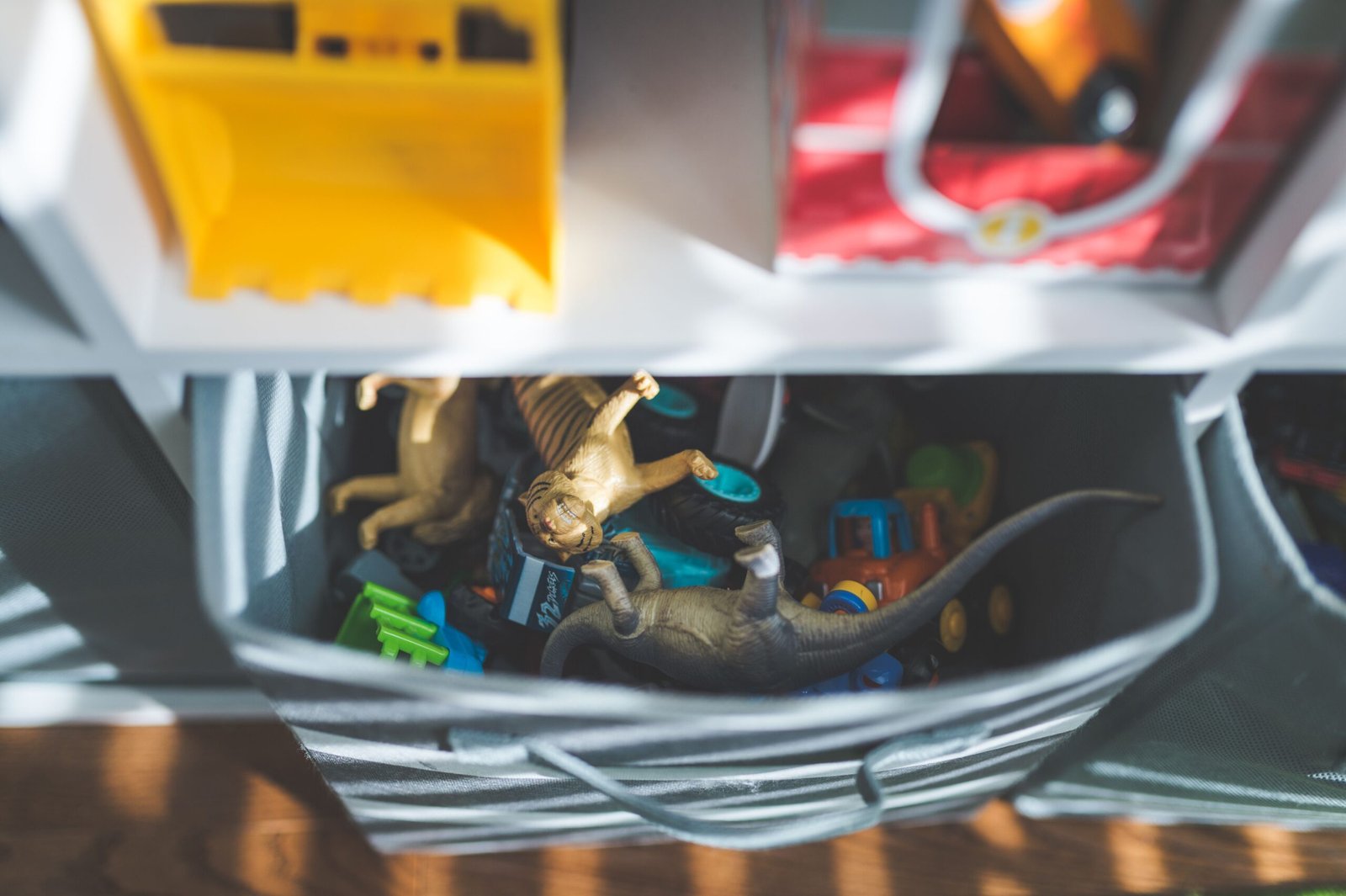
The first rule of kids’ storage is height: if a child cannot reach it, they cannot use it, and they cannot tidy it either. Low shelves, floor-level baskets, and open bins at child height let children choose toys and books themselves and put them back afterwards. Storage that requires an adult to lift things down will always depend on an adult to tidy up, which is neither practical nor fair.
Labels help, even before a child can read fluently. Picture labels — a photo or a simple drawing of what belongs in each bin — let younger children tidy by matching, and word labels can be added as reading develops. Keep the number of categories small: a handful of broad bins — building toys, soft toys, art supplies, books — is far easier for a child to maintain than a dozen narrow categories that require adult sorting.
Open storage works better than closed storage for everyday toys, because children can see what is available and choose without opening every box. That visibility also helps with tidying: a child can see at a glance where a toy belongs, matching it to its bin by picture or by shape, rather than having to remember which closed box holds which category. Open bins do need a little more editing than closed boxes, since everything in them is on display, but for daily toys that trade-off is worth it. A bin that is overflowing is a sign to rotate some items out, not to buy a bigger bin, and that regular rotation is itself part of keeping the room manageable.
Closed storage suits items that are used less often, or that need to stay tidy for safety — small parts, art supplies that stain, or items belonging to older siblings. A mix of open bins for daily toys and a few closed boxes for the rest is usually the right balance.
Flexible Systems Over Fixed Themes
Fixed, themed storage — a system built around one character, colour, or interest — dates quickly and is hard to adapt when interests change. Flexible systems — plain bins, adjustable shelves, modular cubes, and stackable boxes in neutral colours — can be relabelled, rearranged, and reused as a child grows, without buying a new system each time. Neutral basics also make it easier to change a room’s look with bedding or wall colour, rather than replacing furniture.
Adjustable shelving is the most flexible investment in a kids’ room. Shelves that can move up as a child grows, or as books get taller, adapt without new furniture, and a shelf unit that starts as toy storage can become book storage, then study storage, over the years. Similarly, stackable boxes and cubes can be reconfigured from a low play unit into a taller storage wall as needs change.
Choose furniture that does more than one job where possible: a bench with storage inside gives seating and a place for larger toys; a bed with drawers underneath holds out-of-season clothes or spare bedding; a desk with shelves above it keeps study materials close without a separate unit. Multi-use pieces reduce the total amount of furniture a room needs, which leaves more floor space for play. The same multi-use thinking helps in family living areas, and Family-Friendly Living Room Ideas That Still Look Smart covers it there.
Rotate Toys and Books, Don’t Display Everything
Displaying every toy and book at once overwhelms a child and overwhelms a room. Rotation — keeping a portion of toys and books accessible and storing the rest elsewhere, then swapping them every few weeks — keeps play fresh, reduces clutter, and makes tidying manageable. A child with ten toys out will play more deeply and tidy more easily than a child with fifty toys out.
Rotation works best as a simple routine. Keep a box or two of rotated items in a cupboard or another room, and swap a few items at a time rather than everything at once. Let the child help choose what rotates in and out, so the system feels like theirs rather than imposed. Books rotate the same way: a small shelf of current books, with the rest stored and swapped seasonally or when interests change.
- Keep out: a manageable selection of current toys and books, at child height.
- Store away: the rest, in labelled boxes in a cupboard or another room.
- Swap: a few items every few weeks, with the child’s help.
- Let go: toys and books outgrown or broken, passed on or recycled promptly.
Rotation also reveals what a child has genuinely outgrown. An item that sits in storage through two rotations without being missed is ready to leave the house, which keeps the total volume of toys from growing endlessly. Passing items on promptly, rather than storing them indefinitely “just in case”, is part of the system.
Plan for Growth, Not Just Today
Planning for growth means choosing storage that can adapt: shelves that adjust, bins that can be relabelled, furniture that can change use, and a room layout that leaves space for a desk or a larger bed later. It also means leaving some empty space deliberately. A room filled to capacity today has no room for the next interest, the next size of clothes, or the next school year, and it will feel cramped within months.
Clothes storage deserves the same growth thinking. In a bedroom without built-in wardrobes, the principles of Bedroom Storage Ideas for Rooms Without Built-In Wardrobes apply, with children’s clothes kept low enough for them to choose and put away themselves. As children grow, they can take on more of this themselves, which is itself part of growing up.
Finally, involve children in the system as they grow. A young child can match picture labels; an older child can choose categories, decide what rotates, and take responsibility for their own shelves. Storage that a child helped design is storage they are far more likely to use. And when the whole home needs a reset, the same room-by-room approach works for the rest of the house too — see Decluttering Room by Room: A Practical Starter Plan.
It is also worth accepting that a child’s room will never stay perfectly tidy, and that perfection is not the goal. A system that works is one where tidying takes five minutes at the end of the day, not one where every item is always in its exact place. Build that short tidy-up into the daily routine — before bath time, or before bed — and keep it light and matter-of-fact rather than a battle. Children who tidy a little every day, with storage they can reach and categories they understand, develop a habit that will serve them far beyond their bedroom. The room does not need to look like a catalogue photograph; it needs to be a place where a child can find what they want, play, and put things away again without help.
FAQ: Kids’ Room Storage
How many toys should be out at once?
A manageable selection — enough for choice, not so many that the room is overwhelmed. Rotation keeps play fresh: store the rest and swap a few items every few weeks.
What storage can children use themselves?
Low, open bins and shelves at child height, with picture labels for younger children. If a child cannot reach it, they cannot tidy it without an adult.
Should kids’ storage match a theme?
Flexible, neutral systems last longer. Plain bins, adjustable shelves, and modular cubes can be relabelled and rearranged as interests and sizes change, without buying a new system.
How do I handle outgrown toys?
Rotate them out first; if an item sits in storage through two rotations without being missed, pass it on or recycle it promptly rather than storing it indefinitely.
Conclusion
Storage for kids’ rooms works when it is reachable, flexible, and built for rotation: low bins children can use, adjustable shelves and neutral containers that adapt, a manageable selection out at once, and room left for growth. It teaches independence as well as tidiness.
Start with one low shelf or a few labelled bins at child height, and rotate a few toys out this week. A room a child can actually use and tidy is a room that stays calmer for everyone.
1 thought on “Storage Ideas for Kids’ Rooms That Grow With Them”