
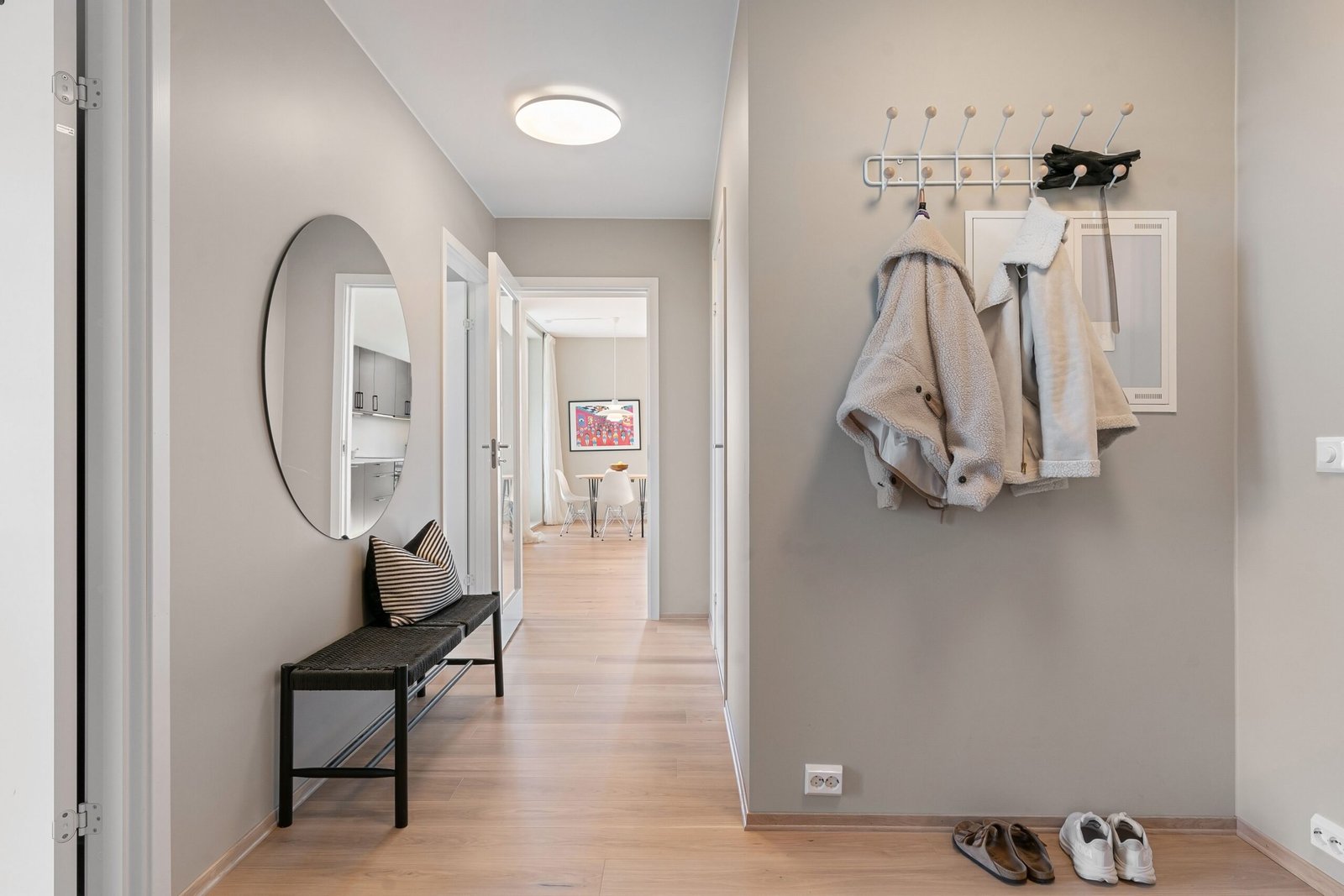
A hallway has a hard job. It is the first thing visitors see, the last thing you pass on the way out, and the place where coats, shoes, keys, bags, and post all arrive at once — usually in a space only a metre or so wide. Most hallway storage fails not because there is too little of it, but because it is the wrong depth, the wrong height, or in the way of the door. A hallway that works is one where everything has a shallow, accessible home and the passage itself stays clear.
This guide focuses on narrow halls and small entryways, where every centimetre matters. The principles are simple: measure depth before buying anything, use the walls rather than the floor, give shoes, coats, and keys one home each, and keep the hallway looking like a hallway rather than a storage room. None of this requires a rebuild, and most of it can be done in a weekend.
Measure Depth Before You Buy
The single most useful measurement in a hallway is depth. A standard wardrobe or shoe cabinet is often 40 to 60 centimetres deep, which in a narrow hall can leave too little room to walk past comfortably, open the front door, or carry bags through. Before buying any storage, measure the hallway’s clear width with the front door open and with coats hanging, and work out how much depth you can give up while still walking through easily.
Shallow storage is the answer in most halls. A shoe cabinet 15 to 20 centimetres deep holds a surprising number of pairs when shoes are stored toe-down, and a wall-mounted coat rail with hooks takes up almost no floor space at all. Bench seating, if you have room for it, should be shallow too — deep enough to sit on briefly to put shoes on, not so deep that it becomes a dumping ground for bags.
Also measure height and door swing. Tall, narrow storage works well in halls because it uses vertical space without eating floor space, but it must not block light switches, radiators, or the swing of internal doors. A quick sketch of the hallway, with doors, radiators, and sockets marked, prevents the common mistake of buying storage that fits the wall but not the way the hallway is actually used.
Wall-Hung Storage for Narrow Halls
Walls are a hallway’s best storage asset. Hooks, rails, and wall-mounted cabinets keep the floor clear, which makes a narrow space feel wider and is easier to clean. A row of sturdy hooks at a height everyone in the household can reach gives coats and bags an immediate home — the key word is immediate, because storage that requires opening a door or lifting a lid is storage that gets skipped on the way in.
Wall-mounted cabinets and shelves work for items that do not need to be grabbed on the way out: hats, gloves, scarves, dog leads, and spare keys. Keep them shallow and closed where possible, so the hallway does not accumulate visual clutter. Open shelving in a hallway looks tidy only when it is edited regularly, which in a high-traffic space is a commitment many households will not keep.
A mirror is not storage, but it earns its place in a hallway by making the space feel larger and brighter, and by giving a last check before leaving. A mirror above a small console or shelf, combined with a tray or bowl for keys, turns a bare wall into a functional landing spot without taking floor space. The same landing-spot thinking, applied to the whole entrance, is covered in Entryway Decor Ideas That Make a Small Hallway Work Harder.
Shoes, Coats and Keys: One Home Each
The three things that most often overwhelm a hallway are shoes, coats, and keys, and each needs exactly one home. Shoes belong in a single place — a shallow cabinet, a rack by the door, or a tray for the pairs in daily use — not scattered across the floor and the bottom of the stairs. Limiting the hallway to current-season, daily-use shoes, with the rest stored elsewhere, is the single biggest improvement most halls can make.
Coats need hooks or a rail with enough space between them that coats do not become a single tangled mass. One hook per person, plus one for guests, is a realistic rule, and out-of-season coats should live elsewhere. Keys, post, and small daily items need a small, fixed home by the door: a tray, a hook, or a small shelf, used every time without thinking. The habit matters more than the container — a beautiful bowl that nobody uses is worse than a plain hook that everyone does.
- Shoes: one shallow cabinet or rack, daily pairs only, everything else stored elsewhere.
- Coats: one hook or rail space per person, out-of-season coats kept out of the hall.
- Keys and post: one fixed tray, hook, or shelf by the door, used on every arrival.
- Bags: one hook or shelf per person, so bags do not end up on the floor or the stairs.
Children’s items need the same discipline at a lower height. Hooks children can reach, a basket they can use themselves, and a clear rule about what lives in the hall will keep a family hallway working far better than storage designed only for adults. The same reachable-storage thinking is developed in Storage Ideas for Kids’ Rooms That Grow With Them.
Keep the Hallway Looking Like a Hallway
A hallway that works as storage but looks like a cupboard has failed at its other job: welcoming people in. Keep the passage clear, the floor visible, and the walls as uncluttered as possible. If storage starts creeping beyond its allotted spot — bags on the stairs, shoes outside the cabinet, coats on every available hook — it is a sign that the system has too much in it, not that it needs more storage. The fix is usually to remove items, not to add containers.
Light and colour help a hallway feel like a room rather than a corridor. A light wall colour, a working light by the door, and a clear, legible house number outside all contribute to the entrance as a whole. Inside, a small rug or runner that can be cleaned easily adds warmth without claiming space, and a single piece of art or a photograph gives the hallway personality without clutter.
It is also worth thinking about who uses the hallway and when. A hallway used by several people leaving at the same time needs a wider clear passage and more hooks than one used by a single person, and a hallway that also serves as the route to a downstairs bathroom or kitchen will see far more traffic than a hallway that leads only to bedrooms. Watch the hallway at its busiest — the morning rush, or the moment guests arrive — and notice where people pause, where bags land, and where the flow jams. Those pressure points are where storage should go, and where it should not. A hook placed where people naturally stop to put shoes on will be used every day; the same hook placed a metre further along, where nobody pauses, will stay empty while shoes pile up by the door. Good hallway storage follows the household’s actual movements, not an idealised picture of how the hallway ought to be used.
Finally, review the hallway seasonally. Coats, shoes, and accessories change with the weather, and a hallway system that worked in summer may be overloaded by winter. A short seasonal reset — moving out-of-season items elsewhere, checking hooks and cabinets, and clearing anything that has drifted in — keeps the hallway working all year. If the hallway is overflowing, the wider problem is often too much stuff overall, and Decluttering Room by Room: A Practical Starter Plan is the place to start.
FAQ: Hallway Storage
How deep can hallway storage be?
It depends on the hallway’s width, but shallow is usually best: shoe cabinets around 15 to 20 centimetres deep and wall-hung storage that leaves a comfortable clear passage, with the front door able to open fully.
Where should shoes go in a small hallway?
In one shallow cabinet or rack by the door, holding daily-use pairs only. Out-of-season and rarely worn shoes should be stored elsewhere, so the hallway holds only what is actually used.
How do I stop coats piling up in the hall?
Give each person one hook or rail space, keep out-of-season coats elsewhere, and review the hooks seasonally. If coats exceed the hooks, remove coats rather than adding more hooks.
What is the best place for keys?
One fixed spot by the door — a tray, hook, or small shelf — used every time you arrive. The habit of using the same spot matters more than the container itself.
Conclusion
Hallway storage works when it is shallow, wall-hung where possible, and disciplined: one home each for shoes, coats, and keys, a clear passage, and a seasonal reset. Measure depth first, buy second, and keep the hallway looking like a hallway.
Start with the shoes: gather every pair in the hall, keep only the daily ones there, and give them one shallow home by the door. That single change will make the whole entrance feel larger and calmer.
1 thought on “Small Hallway and Entryway Storage Ideas That Actually Work”