
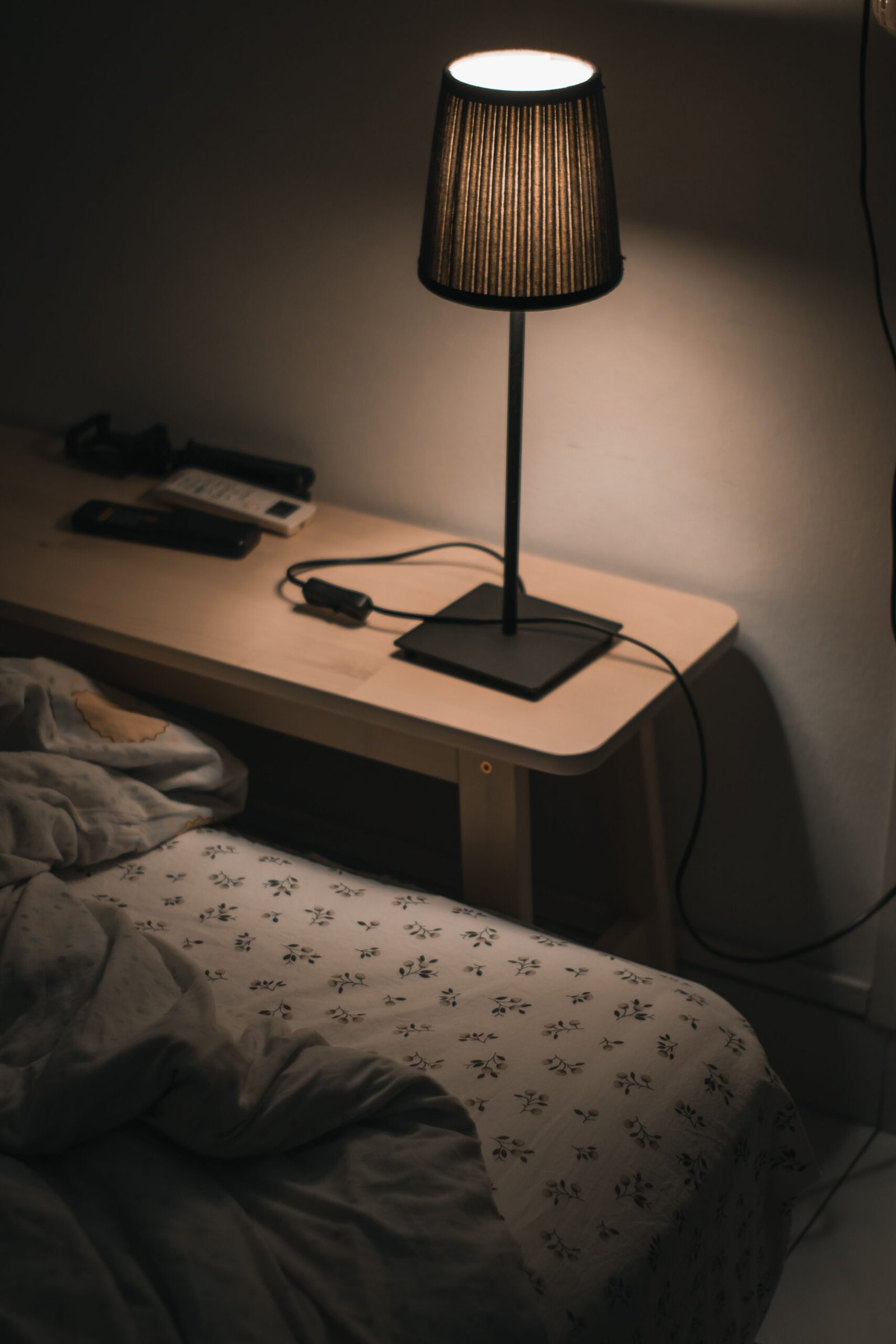
Most bedrooms have exactly one light, in the middle of the ceiling, and it is the wrong light for almost everything a bedroom is for. It is too bright for winding down, too harsh for reading, useless for dressing because it casts shadows, and glaring when you wake in the night. Yet because it is the only light, it gets used for everything, and the bedroom ends up feeling either exposed or gloomy, with nothing in between. The fix is not a new ceiling light. It is more lights, in the right places, doing different jobs.
This guide replaces the single overhead light with a small system: bedside light for reading, dressing and wardrobe light for getting ready, and dim, warm light for evenings. Each section covers placement and warmth, because those two things matter more than brightness or style. The goal is a bedroom where light can be adjusted to the moment — bright enough to dress, soft enough to wind down, dim enough to navigate at night — without a renovation or a large budget.
Why One Overhead Light Fails in Bedrooms
An overhead light fails in a bedroom for a simple physical reason: it lights from above and in the middle, which is the worst position for almost every bedroom activity. For reading in bed, it shines over your shoulder from behind only if you sit directly under it, which you do not — you sit in bed, against the wall, while the light is in the middle of the room, so it casts your shadow onto the page. For dressing, it lights the top of your head and casts shadows on your face in the mirror, which is why getting ready under a single ceiling light so often means checking your appearance again in daylight and finding it different.
For winding down, an overhead light is worse still. A bright, central light tells the brain that it is daytime, because bright overhead light is what daylight is. A bedroom lit this way in the evening feels alert and exposed, however tired you are, because the light itself is working against rest. Dimming helps, if a dimmer is available, but a dimmed overhead light is still central and still flat: it lowers the brightness without changing the quality of the light, and a bedroom needs quality — warmth, direction, pools of light — as much as it needs dimness.
The solution is layers, and it is the same principle that works in every room: ambient light for general visibility, task light for specific activities, and accent light for warmth and atmosphere. In a bedroom, ambient light can be a dimmed overhead light or a pair of wall lights; task light is bedside reading lamps and wardrobe lights; accent light is a small lamp on a chest of drawers, a candle, or a string of soft lights. Together, they let the room change character through the day, which a single light never can. That layering principle, in its full form, is explained in How to Layer Lighting to Make Any Room Feel Cosy, and it applies to bedrooms as much as to any other room.
Bedside Light for Reading
Bedside light is the most important bedroom light, because reading in bed is how many people wind down, and it is also the light most often done badly. The rule is the same as for any reading light: light should fall on the page from behind or beside you, over your shoulder, without shining in your eyes or casting your shadow across the book. In a bedroom, that means a lamp beside the bed, slightly behind the seated position, tall enough that its light reaches the page, with a shade that directs light downwards rather than outwards into your eyes.
Wall-mounted bedside lights are worth considering, especially in a small bedroom, because they free the bedside table for a book, a glass of water, and a phone, and they can be positioned exactly where the light is needed rather than where a table happens to be. A wall light with an adjustable arm is ideal, because it can be angled for reading and folded away when not in use. A clip-on book light is the smallest version of the same idea, and it suits a bedroom where a partner is already asleep, because it lights only the page and almost nothing else.
Warmth matters for bedside light more than brightness. A warm-toned bulb — warm white rather than cool white — feels restful in the evening and is easier on the eyes when you are tired. Brightness should be enough to read by comfortably without straining, but no more: a bedside lamp that is too bright will keep you alert rather than help you wind down, and it will disturb a partner. A dimmer, or a lamp with multiple brightness settings, lets you adjust the light as you get sleepier, which is exactly what a wind-down light should do.
Dressing and Wardrobe Light
Dressing light is the light most bedrooms lack entirely, and its absence shows up as clothes that look different in daylight from how they looked in the bedroom mirror. The problem is that an overhead light casts shadows downwards, so your face and your clothes are lit from above, which flattens colours and hides details. Dressing light should come from the front, at face and body height, so you see yourself as others will see you — lit evenly, without harsh shadows.
A mirror with lights on either side, or a pair of wall lights flanking a mirror, is the classic solution, and it works for the same reason dressing-room mirrors have lights around them: light from both sides eliminates shadows. In a bedroom without a dedicated dressing mirror, a floor lamp or a table lamp placed near the wardrobe, at a height that lights clothes rather than the top of your head, does much of the same job. The light should be bright enough to see colours accurately, which means a neutral or slightly warm white rather than a very warm, yellow light that distorts colours.
Wardrobe light is a smaller, more specific need: light inside a wardrobe or closet so you can see what is there without holding a phone torch. A battery-powered LED strip or a small stick-on light inside a wardrobe costs very little, needs no wiring, and transforms the experience of choosing clothes in the morning, especially in a dark wardrobe or a bedroom with only one window. It is a small provision, but it is one that guests and household members notice immediately, because it removes a daily frustration.
Wardrobe light also helps with the wider bedroom storage system. A wardrobe that is lit is a wardrobe that gets used properly, because clothes are visible and therefore chosen and returned rather than left on a chair. That connection between light and tidiness is easy to overlook, but it is real: a dark wardrobe encourages the chair pile, while a lit wardrobe encourages the habit of putting clothes away. For the storage system itself, see Bedroom Storage Ideas for Rooms Without Built-In Wardrobes, which covers sorting, freestanding wardrobes, and daily-items systems in bedrooms without fitted storage.
Dim, Warm Light for Evenings
Evening light in a bedroom should do the opposite of morning light: it should lower, warm, and narrow, signalling that the day is ending. The simplest way to achieve this is to stop using the overhead light in the evening altogether, and to use only bedside lamps and one or two small accent lights instead. A bedroom lit only by a pair of warm bedside lamps feels intimate and restful in a way that no overhead light, however dimmed, can match, because the light is low, warm, and localised rather than central and flat.
Warmth is the key quality. Warm-toned bulbs — the kind described as warm white, around the warmth of candlelight or late-afternoon sun — feel restful because they resemble the light of evening itself. Cool-toned bulbs, by contrast, feel alert and clinical, and they are the wrong choice for a bedroom in the evening, however good they are for a kitchen or a workspace. If the bedroom’s lamps currently have cool bulbs, swapping them for warm ones is the cheapest and most effective evening-lighting change available, and it takes less time than reading this paragraph.
Night-time light is the final layer: a very dim light that lets you navigate without waking fully. A small plug-in nightlight in the hallway or near the bedroom door, a bedside lamp on its lowest setting, or a motion-sensor light that comes on dimly when you get up — any of these is better than the overhead light at three in the morning. The light should be dim, warm, and low, so it lights the floor rather than the room, and it should switch off automatically or be easy to switch off from the bed. A bedroom with this layer feels safe at night without feeling lit, which is exactly what night-time light should do.
The overall effect of these layers — bedside light for reading, dressing light for mornings, dim warm light for evenings, and a faint light for the night — is a bedroom that changes character through the day, in the same way that a living room lit for daytime and evening feels like two different rooms. That daytime-evening balance is explored for living rooms in Living Room Lighting Ideas for Daytime and Evening Use, and the principle transfers directly: light each activity separately, make the controls simple, and let the room adapt to who is using it and when.
FAQ: Bedroom Lighting
How many lights does a bedroom need?
At least three: a bedside light for reading, a dressing or wardrobe light for mornings, and a dim warm light for evenings, plus the overhead light for general use when needed. A bedroom with only an overhead light will always feel either too bright or too dim, because one light cannot serve activities that want different light.
Should bedroom bulbs be warm or cool white?
Warm white for the evening and for bedside reading, because it feels restful and resembles evening light. A neutral white is better for dressing, where accurate colour matters, so a dressing mirror light can be slightly cooler than the bedside lamps without harming the room’s evening mood.
Are wall-mounted bedside lights better than table lamps?
They are better in a small bedroom, because they free the bedside table, and they can be positioned exactly where the light is needed. Table lamps are better if you rent and cannot fix lights to the wall, or if you like to move lamps around. Either works, provided the light falls on the page from behind or beside you.
What is the best night-time light for a bedroom?
A very dim, warm light, low to the floor, that switches off easily or automatically — a plug-in nightlight, a bedside lamp on its lowest setting, or a motion-sensor light. It should let you see the floor and the door without lighting the room or waking you fully.
Conclusion
A bedroom lit only by an overhead light will always feel wrong, because one central light cannot serve reading, dressing, winding down, and navigating at night. Replace it with a small system: bedside light that falls on the page, dressing light that flatters rather than shadows, dim warm light for evenings, and a faint light for the night. Choose warm bulbs for the evening, make each light switchable on its own, and let the room change character through the day. A bedroom lit this way feels restful at night and practical in the morning, which is exactly what a bedroom should do.