
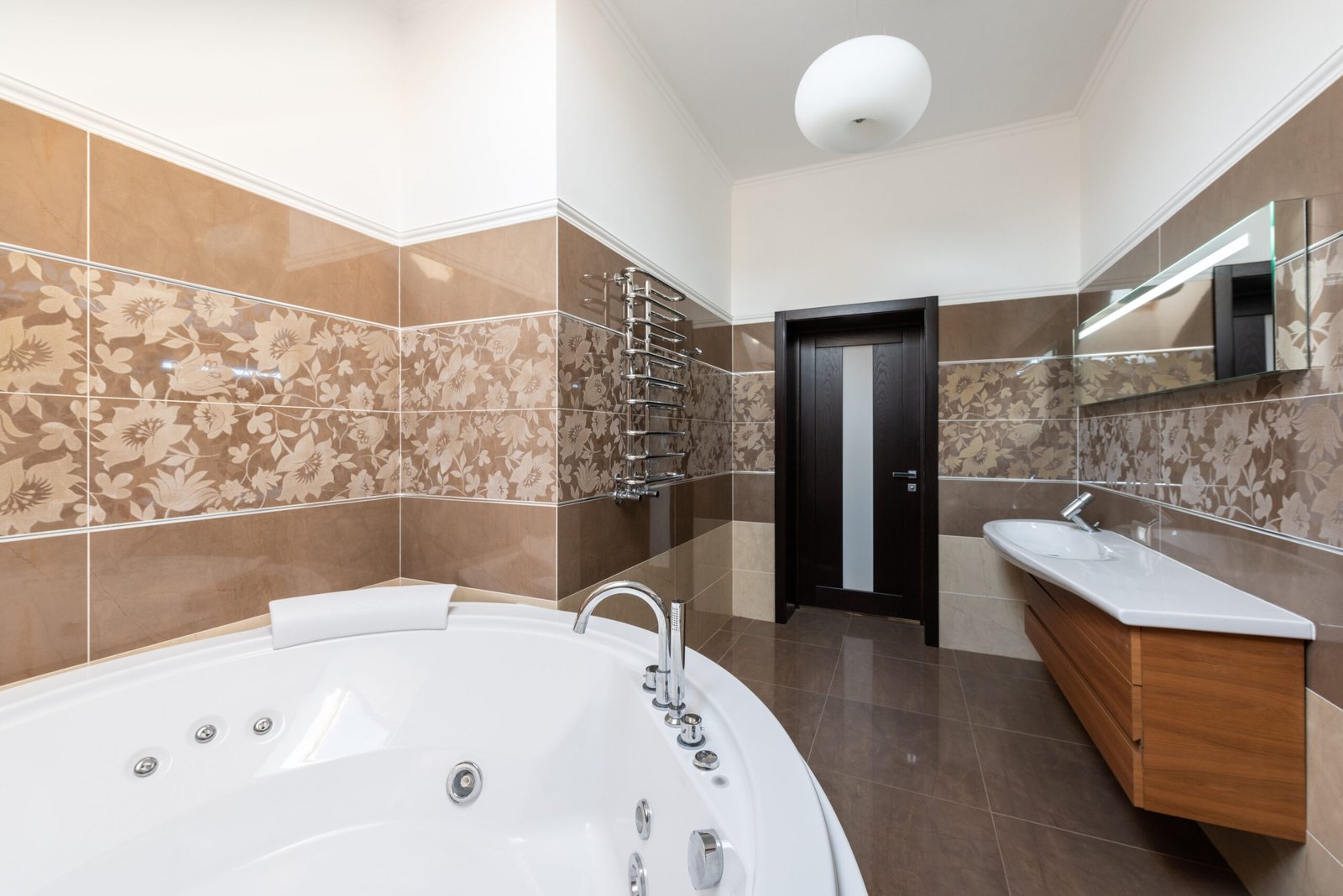
A bathroom that works but looks tired is a common problem. The suite is sound, the plumbing works, the tiles are intact, yet the room feels dated, dim, or unwelcoming. A full renovation — new suite, new tiling, replumbing — is expensive, disruptive, and often unnecessary. A refresh, by contrast, works with what is already there: paint, hardware, mirrors, lighting, and storage, plus small repairs to grout and sealant, can transform how a bathroom feels without moving a pipe or lifting a tile.
This guide is about that distinction. It explains what a refresh can and cannot fix, how to use paint, hardware, and mirrors to change the room’s character, how lighting and storage alter the feel of the space, and which small repairs are worth doing as part of a refresh. It assumes a bathroom whose plumbing, waterproofing, and structure are sound. If there is a leak, persistent damp, or damaged waterproofing, those problems need professional attention first, because no amount of cosmetic work will fix them.
What a Refresh Can and Cannot Fix
A refresh can change colour, light, storage, and surface appearance. It can make a small bathroom feel larger and brighter, a dated bathroom feel current, and a cluttered bathroom feel calm. Paint on walls and, where suitable, on tiles can change the palette entirely; new hardware can make a tired suite look intentional; a larger mirror and better lighting can change how the room feels at every time of day. These are real, visible improvements, and they are achievable in a weekend or two.
A refresh cannot fix a leaking pipe, a failed waterproof membrane, a cracked bath or basin, or tiles that are lifting because of water damage underneath. It cannot fix poor layout — a door that hits a basin, a shower that is too small to use comfortably, or a bathroom with no ventilation — and it cannot fix a suite that is damaged beyond cosmetic wear. Attempting to refresh over these problems will hide them temporarily and allow them to worsen, which is why a refresh should begin with an honest assessment: is the room sound underneath its tired appearance, or is it tired because something is failing?
Ventilation is a particular check for bathrooms. A bathroom without adequate ventilation — an opening window, an extractor fan that works, or both — will develop condensation, mould, and paint failure, however well it is decorated. Before refreshing, check that the fan works, that its duct is not blocked, and that the room can be ventilated after showers. If ventilation is inadequate, improving it is a priority, and it may need professional help, particularly if it involves electrical work or ducting through a wall or roof.
Paint, Hardware and Mirrors
Paint is the most transformative refresh tool, because bathroom walls cover a large area and are often the most dated element. A fresh coat of paint suitable for bathrooms — one that resists moisture and can be wiped clean — can change the room’s character completely, especially when combined with a lighter, brighter palette in a small or windowless bathroom. A large area can be painted in a weekend if the preparation is done well, and a full painting method is described in How to Paint a Room Like a Pro: Preparation, Technique and Finish.
Painting tiles is a more debated option. Specialist tile paint can refresh dated tiles without removing them, and it can be effective when applied carefully to clean, sound tiles, with proper preparation and curing time. It is not, however, as durable as new tiling, particularly in a shower area subject to constant water and cleaning, and it will need touch-ups over time. If tile paint is used, it should be seen as a medium-term refresh, not a permanent replacement for tiling, and shower areas should be approached with particular caution.
Hardware is the small detail that makes a refresh look deliberate. Replacing dated taps, a shower head, cabinet handles, a towel rail, and a toilet seat — all jobs that are within a careful beginner’s range, provided water can be isolated where needed — can make a suite that is structurally sound look current. Choose hardware in a consistent finish, rather than mixing finishes that clash, and check compatibility before buying, particularly for taps and shower fittings, where sizes and connections vary.
Mirrors deserve special attention in a bathroom refresh, because they affect both light and perceived space. A larger mirror, or a mirror that spans more of the wall above a basin, reflects light and makes a small bathroom feel larger, and a mirror with integrated lighting can solve both reflection and illumination in one fitting. Position the mirror where it reflects light from a window or a light source, rather than where it reflects a blank wall or clutter, and keep it clean, because a spotted or streaked mirror undermines the whole refresh.
Lighting and Storage That Change the Feel
Lighting is often the weakest element in a tired bathroom. A single, harsh ceiling light, possibly with a dirty or yellowed cover, makes a bathroom feel clinical and unflattering, and it creates shadows that make grooming harder. Replacing the light with a fitting suitable for bathroom zones, cleaning or replacing the cover, and adding task lighting around the mirror — where it lights the face evenly, without harsh shadows — transforms both the look and the usability of the room. Electrical work in bathrooms is regulated and must be done safely; if a new fitting involves wiring beyond a like-for-like replacement, professional help is required.
Colour temperature matters in bathroom lighting as much as elsewhere. A neutral or slightly warm white is usually most flattering and most useful for grooming, while a very cool, harsh white can feel clinical. If the bathroom has a window, daylight should be maximised by keeping the window clean, using a blind or frosted film that admits light while preserving privacy, and avoiding heavy curtains or obstructions that block daylight. A bathroom that is bright in the daytime feels larger and cleaner, whatever its size.
Storage changes how a bathroom feels as much as colour does. A bathroom whose surfaces are covered with bottles, products, and clutter feels small and untidy, however well it is decorated, while a bathroom with clear surfaces and closed storage feels calm and spacious. The most effective storage refresh is often not new furniture, but a clear-out: removing products that are unused or expired, grouping daily items in a basket or a cabinet, and giving everything else a home inside a cupboard, a drawer, or a wall-mounted cabinet. A small, well-placed shelf or a cabinet above the basin can provide that home without taking floor space.
Textiles complete the storage and lighting changes. Fresh towels in a consistent colour, a clean bath mat, and a shower curtain that is not stained or mouldy all contribute to a bathroom feeling refreshed, and they are inexpensive compared to any structural change. Choose towels and mats that suit the new palette, keep them clean and replaced when worn, and avoid over-decorating a small bathroom with too many accessories, which will quickly recreate the clutter the refresh removed.
Grout, Sealant and Small Repairs
Grout and sealant are the details that most betray a tired bathroom, because they are the parts that show dirt, mould, and wear most clearly. Discoloured grout can often be cleaned with a suitable cleaner and a brush, and grout that is cracked or missing in small areas can be raked out and re-grouted, provided the tiles underneath are sound. Re-grouting is a fiddly job, but it is one that a patient beginner can do, and it makes a tiled area look significantly newer without replacing a single tile.
Sealant around baths, basins, and showers is both a cosmetic and a waterproofing detail, and it should be treated as such. Sealant that is mouldy, cracked, or peeling should be removed completely, the joint cleaned and dried, and new sealant applied evenly, with attention to the manufacturer’s instructions for curing. Sealant that is merely discoloured on the surface can sometimes be cleaned, but sealant that has failed underneath — where water can pass behind it — must be replaced, not painted over, because water behind a bath or shower will cause damage that a cosmetic refresh cannot fix.
Small repairs that are worth doing as part of a refresh include fixing a dripping tap, tightening a loose toilet seat or towel rail, replacing a cracked tile if the replacement can be matched and the area underneath is sound, and re-fixing a loose mirror or cabinet. These are the kinds of beginner repairs that, done properly, make a bathroom feel maintained rather than merely decorated. They are also a useful test of the refresh’s honesty: a bathroom that has been refreshed and repaired feels cared for, while a bathroom that has been painted over failing details feels like a cover-up, and the difference is noticeable to anyone who uses the room daily.
If a refresh reveals a problem that is beyond cosmetic work — a leak, a soft floor, a persistent damp patch, or a cracked suite — the refresh should pause while that problem is assessed professionally. It is better to delay a refresh than to complete it over a failing structure, because the refresh will need to be redone when the underlying problem is fixed, and the damage will have worsened in the meantime. A refresh is a good project precisely because it is reversible and low-risk, but only when it is applied to a sound room.
FAQ: Bathroom Refresh Without Renovation
How much can a bathroom refresh actually change?
A great deal, if the room is sound. Paint, hardware, mirrors, lighting, and storage can change colour, light, and perceived space, and they can make a dated bathroom feel current. A refresh cannot fix layout, plumbing, or structural problems, and it should not be used to hide them.
Is painting bathroom tiles a good idea?
It can be a useful medium-term refresh on clean, sound tiles, with proper preparation and curing, but it is not as durable as new tiling, especially in shower areas. Treat it as a temporary improvement, not a permanent replacement, and approach shower areas with caution.
Do I need an electrician for bathroom lighting?
For a like-for-like replacement of a fitting, a competent homeowner may be able to do the work safely, but any new wiring, or any work in a bathroom zone that requires it, should be done by a qualified electrician, because bathroom electrics are regulated for safety.
What is the most cost-effective bathroom refresh?
Usually, a combination of paint, new hardware, a larger or better-positioned mirror, and a clear-out of clutter and old products, plus cleaning or replacing grout and sealant where needed. These changes are inexpensive, achievable in a weekend or two, and together they change how the room looks and feels.
Conclusion
A bathroom refresh without a full renovation is about working with what is already there, honestly. Start by checking that the room is sound — plumbing, waterproofing, ventilation, and structure — and then use paint, hardware, mirrors, lighting, and storage to change its character. Add the small repairs that make it feel maintained: clean or replaced grout, new sealant where it has failed, and fixed taps, seats, and rails.
The result will not be a new bathroom, and it should not pretend to be one. It will be a bathroom that feels brighter, calmer, and better cared for, achieved in a weekend or two, at a fraction of the cost and disruption of a renovation. That is a worthwhile improvement in its own right, and it is often the right improvement for a room that works but looks tired, as part of a wider pattern of small, finished projects, including the weekend projects described in Home Improvement Projects You Can Finish in a Weekend. For a calmer overall feel in the home, the same principles of light, colour, and uncluttered space are explored in Calm Bedroom Ideas: Soft Colours, Quiet Textures.
1 thought on “Bathroom Refresh Ideas Without a Full Renovation”