
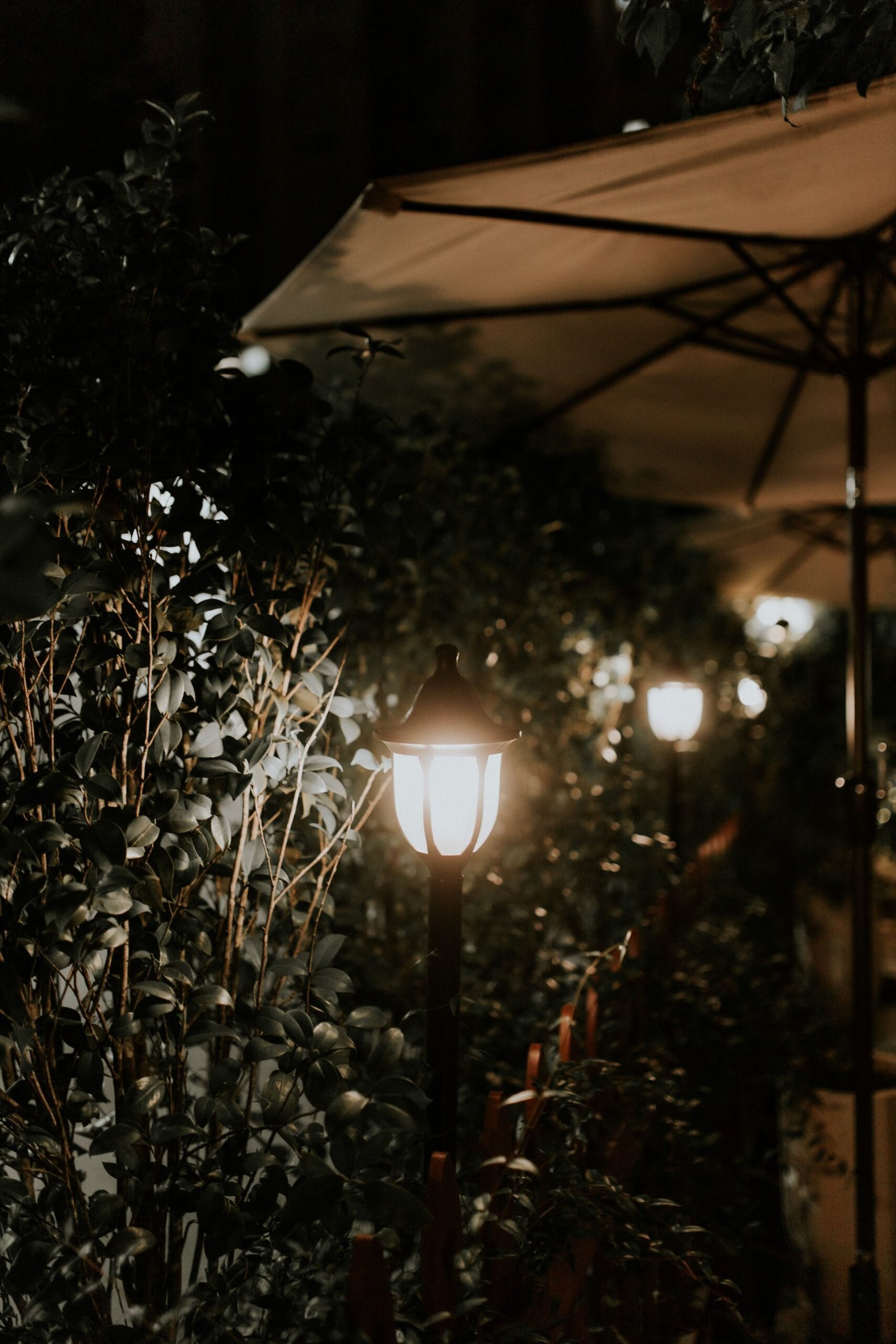
Garden lighting does two jobs at once, and they are easy to confuse. The first is safety: lighting paths, steps, and changes of level so people can move around after dark without tripping. The second is atmosphere: warm, low light that makes a garden feel inviting in the evening, rather than dark or floodlit. A garden that does only one of these well feels either unsafe or unwelcoming; a garden that does both feels like an extension of the home.
This guide covers both jobs in order: light paths and steps first, then warm light for seating areas, then highlighting plants without glare, and finally the practicalities of power, weather, and controls. The aim is a garden you can use safely and enjoyably after sunset, without turning night into day.
Light Paths and Steps First
Safety comes first, and it starts with the route people actually walk: from the house to the seating area, along paths, and up or down any steps. These are the places where a trip or a missed step is most likely, and they are also the places where lighting is most often missing. A path that is perfectly clear by day can be treacherous after dark, especially where a step, a low wall, or a change in surface is not obvious.
Path lighting should be low, even, and directed downwards. Low bollard lights, recessed ground lights, or small wall lights set into a wall beside a path all work, provided they light the ground rather than shining into people’s eyes. Space them evenly so there are no dark gaps, and avoid a single bright light at one end of a path that leaves the rest in shadow. Steps deserve particular attention: a light on each step, or a strip light under the tread, makes the edge of each step visible, which is what prevents falls.
Think about the journey, not just the destination. The route from the back door to the seating area, from the seating area to a shed or a gate, and any path used after dark all need light. It is better to light a whole route modestly than to light one area brightly and leave the approach dark. And keep the light level consistent: moving from a bright area into darkness is disorienting, so avoid sharp contrasts between lit and unlit areas.
Warm Light for Seating Areas
Seating areas want a different kind of light entirely: warm, low, and soft. The colour of light matters here. Warm white light — the kind that feels like candlelight or a household lamp — makes people, food, and plants look inviting. Cool, blue-white light, by contrast, feels clinical and makes a garden feel like a car park. When buying lights, check the colour temperature: warm white is usually described as around 2700K, and it is the right choice for seating areas.
String lights, lanterns, and festoon lights are the classic choice for seating areas, and they work because they spread light evenly at a low level, without a single harsh source. Drape them along a pergola, a fence, or a wall, rather than hanging a single bright light overhead. Lanterns with candles or battery lights, placed on tables and walls, add pools of warm light at sitting height, which is where it matters. The aim is enough light to see faces and food comfortably, and no more.
Dimming makes a real difference. Lights that can be dimmed — or simply lights at a low brightness — allow the seating area to feel relaxed rather than exposed. If your lights are too bright, try fewer of them, lower-wattage bulbs, or shades that diffuse the light. A seating area lit softly feels private and comfortable; the same area lit brightly feels watched. For the wider project of making a patio into a usable room, Outdoor Living Ideas: Turning a Patio Into an Extra Room covers shelter, seating, and lighting together.
Highlight Plants Without Glare
Highlighting plants and features — a tree, a sculpture, a water feature, a striking shrub — adds depth to a garden at night, turning a flat dark space into a layered one. The technique is simple: light the feature from below or from the side, so it stands out against the dark, and keep the light source itself hidden. A spotlight buried in a bed, aimed up into a tree canopy, creates a beautiful effect and draws the eye; the same spotlight aimed at eye level creates glare and ruins the effect.
Choose a few features to highlight, not everything. A garden where every plant is lit looks busy and flat, while a garden with two or three lit features — a tree, a wall, a specimen shrub — looks composed and interesting. Uplighting a tree is particularly effective: the canopy glows, the trunk becomes a feature, and the light filters through leaves in a way that feels natural. Downlighting from a tree or a pergola, by contrast, mimics moonlight and creates soft pools of light on the ground below.
- Hide the light source: bury spotlights, tuck them behind plants, or mount them low so the fitting itself is not visible.
- Light from below or from the side, never directly towards where people sit or walk.
- Pick two or three features to highlight; lighting everything flattens the garden.
- Use warm light for plants, as for seating — cool light makes foliage look harsh.
Glare is the enemy of good garden lighting, and it is worth checking your lighting from every seat and path, not just from the house. Walk the garden after dark, sit in each seating area, and look for lights that shine directly into your eyes. Moving a light a short distance, shielding it, or angling it downwards usually fixes glare without losing the effect. The same warm, layered approach that works outdoors also works indoors, as explained in How to Layer Lighting to Make Any Room Feel Cosy.
Power, Weather and Simple Controls
Practicalities decide whether garden lighting gets used or becomes a chore. Solar lights are the simplest option: no wiring, no running costs, and easy to move. Their limits are brightness and reliability — they charge slowly in dull weather and fade during the night — so use them for path marking and atmosphere rather than as the only light. For reliable lighting, mains-powered or plug-in lights, installed by a qualified electrician where wiring is involved, give a brighter and more consistent result.
Weather resistance matters. Outdoor lights should be rated for outdoor use, with fittings that keep rain out and cables that are protected from damage, especially where they cross paths or lawns. Check fittings each spring for damage, corrosion, or water ingress, and replace any that are cracked or loose. Low-voltage systems are a good middle ground: safer than mains voltage outdoors, brighter and more reliable than solar, and relatively simple to extend as the garden grows.
Controls should be simple enough that lighting actually gets switched on. A timer, a dusk-to-dawn sensor, or a simple remote control means the garden lights itself at sunset without anyone remembering. Smart controls and apps are useful if you already use them indoors, but a simple timer is often enough: set it to switch on at dusk and off at a sensible hour, and the garden will be lit every evening without thought. Keep controls accessible from the house, so switching the garden on is as easy as switching a room on. Good lighting also contributes to the front of the house, where a well-lit entrance feels safer and more welcoming — see How to Improve Your Home’s Curb Appeal on a Budget for the entrance as a whole.
FAQ: Garden Lighting
What colour light is best for a garden?
Warm white, around 2700K, for seating areas and plants. It feels inviting and natural. Cool white light feels harsh outdoors and is best avoided except for task lighting.
Are solar lights good enough for a garden?
For path marking and atmosphere, yes. For reliable, bright lighting on a patio used every evening, mains or low-voltage lights are more consistent, especially in dull weather.
How do I avoid glare in garden lighting?
Hide the light source, aim lights downwards or at features rather than at eye level, and check the effect from every seat and path after dark. Shielding or re-aiming a light usually fixes glare.
Should I light the whole garden or just parts?
Light the routes people walk and the seating areas first, then highlight two or three features. Lighting everything looks flat; selective lighting looks composed.
Conclusion
Good garden lighting does two jobs: it makes paths and steps safe, and it makes seating areas warm and inviting. Light routes first, use warm low light for sitting, highlight a few features without glare, and keep power and controls simple enough that the lights actually get used.
Walk your garden after dark this week and note the dark spots on paths and the harsh spots over seating. Fixing those two things is most of the job, and it will change how much you use the garden in the evenings.
1 thought on “Garden Lighting Ideas for Safer, Warmer Evenings Outdoors”