A first vegetable garden should be small, simple, and successful. The most common beginner mistake is starting too big: a large plot, a long list of crops, and a workload that becomes overwhelming by midsummer, when weeds, watering, and harvesting all peak at once. A small garden, well planned, will teach you more and feed you better than a large garden half kept.
This guide plans a realistic first season: choosing a sunny, reachable spot, starting small with bed size and crop count, preparing soil in plain terms, and following a simple timeline through the year. The aim is a first season you enjoy, not one you survive.
Choose a Sunny, Reachable Spot
Vegetables need sun. Most crops want at least six hours of direct sunlight a day, and the more sun the better for fruiting crops such as tomatoes, beans, and courgettes. Leafy crops tolerate a little less sun, but even they grow slowly in shade. Watch your garden through a day before choosing a spot, and pick the sunniest area that is also practical: near the house, near a water supply, and on ground you can reach easily in all weathers.
Reachability matters more than beginners expect. A vegetable garden at the far end of a large garden, down a muddy path, will be visited less often than one by the back door, and vegetables need regular visiting: watering, weeding, and harvesting are all frequent jobs in the growing season. A spot you pass every day — by the kitchen door, beside a patio, or along a path you already use — will get the attention it needs almost without effort. Convenience is not laziness; it is good garden design.
Also check drainage and shelter. Vegetables dislike waterlogged soil, so avoid the lowest, wettest part of the garden, and avoid spots where water pools after rain. A little shelter from wind helps, especially for tall crops such as beans, but avoid deep shade from trees or buildings, which will compete for light and water. A sunny, sheltered, well-drained spot near the house is the ideal, and it is worth taking time to find it before digging anything.
Start Small: Bed Size and Crop Count
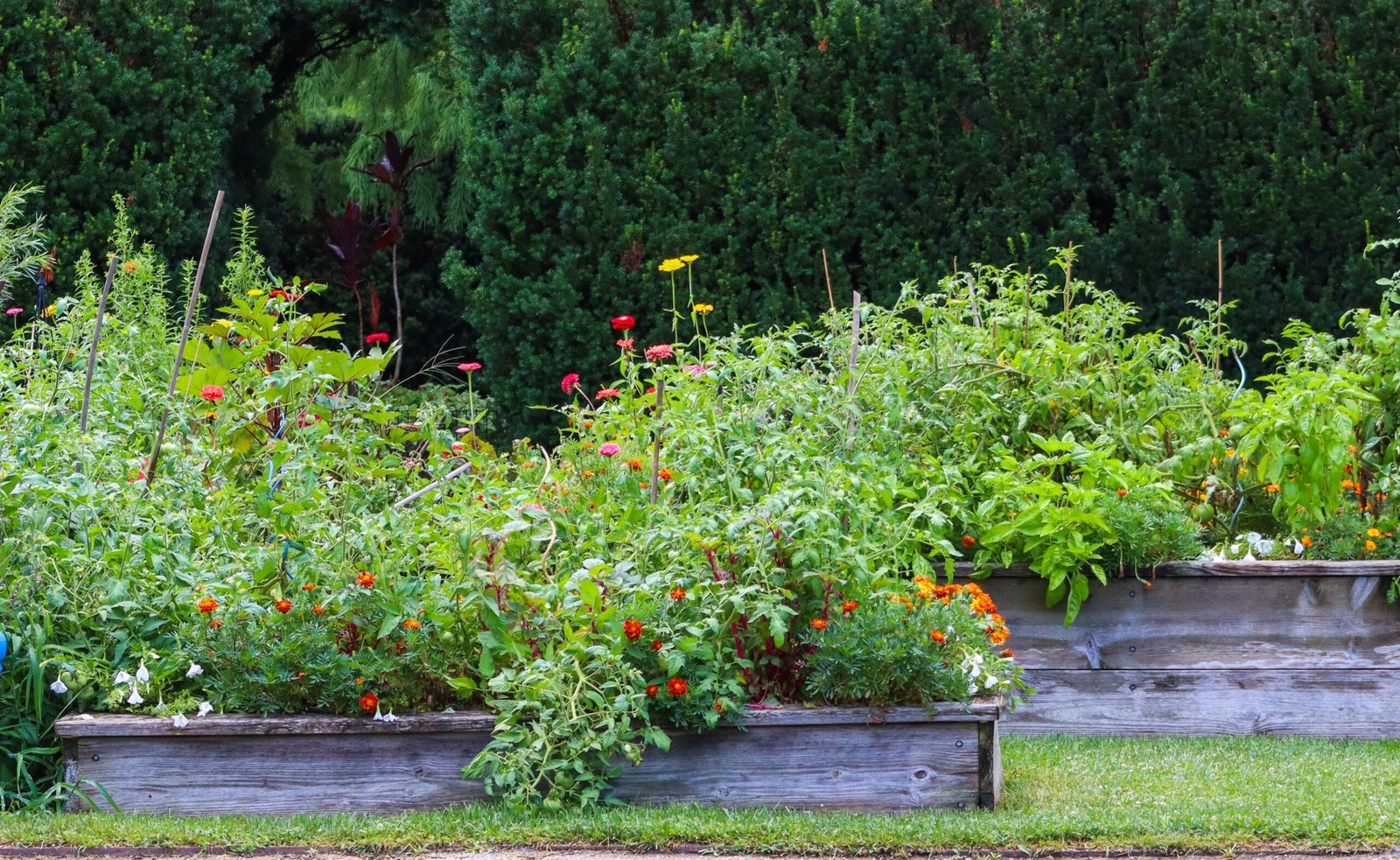
A raised bed or a small plot, roughly one to two metres wide and two to three metres long, is plenty for a first season. The width matters: you should be able to reach the middle from either side without stepping on the soil, because stepping on soil compacts it and makes it harder for roots to grow. A bed you can tend from the edges, without walking on it, stays loose and productive. Paths between beds should be wide enough to kneel and work comfortably.
Crop count matters just as much as bed size. Five or six crops, grown well, will teach you more and feed you better than fifteen crops grown badly. Choose crops you actually eat, that are easy for beginners, and that give a return over a long period: salad leaves, radishes, and herbs for quick results; beans, courgettes, and tomatoes for summer abundance; and potatoes or onions for satisfying staples. Quick crops matter for morale: radishes and salad leaves can be ready within weeks, giving you a result while slower crops are still growing.
- Grow what you eat, not what looks impressive in a catalogue.
- Mix quick crops (radishes, salad) with longer crops (beans, tomatoes) so there is always something to harvest.
- Leave space between plants for their mature size — crowded plants compete and produce less.
- Keep a simple record of what you planted, where, and when, so next season builds on this one.
Succession sowing is a useful habit to learn in a first season, and it is simpler than it sounds. Instead of sowing a whole row of salad leaves at once, sow a short row every two or three weeks through spring and summer. Each sowing matures in turn, so you harvest a steady supply rather than a glut that bolts or goes to waste, and the bed stays productive for months. The same idea works for radishes, beans, and other quick crops: little and often beats a single large sowing, and it spreads the work of sowing, watering, and harvesting across the season rather than concentrating it in one busy week.
Herbs are a natural companion to a first vegetable garden, and they are the easiest crops of all to start with. If you have not grown herbs before, Beginner’s Guide to Growing Herbs at Home covers the forgiving herbs, containers, and watering basics that also apply to vegetables. A few herb pots beside the vegetable bed give you fresh flavour while the vegetables grow.
Soil Preparation in Plain Terms
Soil preparation sounds technical, but it is simple: remove weeds, loosen the soil, and add organic matter. Start by clearing the bed of weeds, including roots, because weeds left in the soil will compete with your crops all season. Then dig or fork the soil over to loosen it, breaking up large clods, and work in compost or well-rotted manure. Organic matter improves almost every soil: it helps sandy soil hold moisture, helps clay soil drain, and feeds the organisms that keep soil healthy.
Do not overcomplicate soil. You do not need to test every nutrient or buy a shelf of products for a first season. Good compost, worked into the top layer of soil, is enough for most vegetables to grow well. If your soil is very heavy clay or very light sand, extra compost helps, and raised beds filled with a mix of topsoil and compost are a reliable solution for difficult ground. Raised beds also warm up faster in spring, drain better, and are easier to tend without stepping on the soil.
One habit will improve your soil more than any product: never leave it bare. Bare soil dries out, erodes, and invites weeds. Mulch beds with compost, straw, or bark after planting, and plant ground-cover crops or green manures over winter to protect the soil. Soil that is covered stays moist, stays alive, and needs less work next season. This is the same principle behind low-maintenance gardening generally, as explained in How to Create a Low-Maintenance Garden That Still Looks Cared For.
A Simple First-Season Timeline
A first season has a natural rhythm, and following it avoids the most common timing mistakes. In late winter and early spring, prepare the bed, plan the layout, and start a few crops indoors or under cover if you have a sunny windowsill. In spring, after the last frost, plant out hardy crops first — salad, peas, broad beans — and tender crops such as tomatoes and courgettes once nights are reliably warm. Planting tender crops too early, in cold soil, is a common beginner error that sets them back more than a later, warmer planting.
Summer is the season of watering, weeding, and harvesting. Water deeply and less often, rather than a little every day, so roots grow down rather than staying at the surface. Weed little and often, while weeds are small, and harvest regularly — picking beans, courgettes, and salad leaves frequently encourages more growth, while leaving crops unpicked can slow the plant down. Summer is also when a vegetable garden rewards attention most visibly: a bed visited daily in July gives a basket of food, while a bed visited weekly gives weeds.
Autumn is for tidying and planning. Clear finished crops, compost healthy material, and sow green manures or cover crops over empty beds to protect the soil through winter. Take notes while the season is fresh: what grew well, what struggled, what you ate most, and what you would change. Those notes are the most valuable thing a first season produces, because they turn one season’s experience into next season’s plan. A year-round view of garden tasks, season by season, is covered in Seasonal Garden Care: A Simple Year-Round Checklist.
FAQ: Planning a First Vegetable Garden
How big should a first vegetable garden be?
Small: a bed one to two metres wide and two to three metres long is plenty. You should be able to reach the middle from either side without stepping on the soil.
What are the easiest vegetables for beginners?
Salad leaves, radishes, beans, courgettes, and potatoes. They are forgiving, productive, and give quick or satisfying results. Grow what you actually eat.
How much sun do vegetables need?
Most want at least six hours of direct sun a day. Fruiting crops such as tomatoes and beans want the sunniest spot; leafy crops tolerate a little less.
When should I plant tender crops like tomatoes?
After the last frost, when nights are reliably warm and the soil has warmed up. Planting too early in cold soil sets plants back more than a later planting.
Conclusion
A first vegetable garden works when it is small, sunny, and reachable: a bed you can tend from the edges, five or six crops you actually eat, soil improved with compost, and a simple timeline from spring preparation to autumn tidying. Start small, learn what grows well for you, and expand next season.
Choose your spot, prepare one bed, and plant a few crops you love to eat. A small garden that succeeds is worth far more than a large one that overwhelms, and it is the best foundation for every season after.