
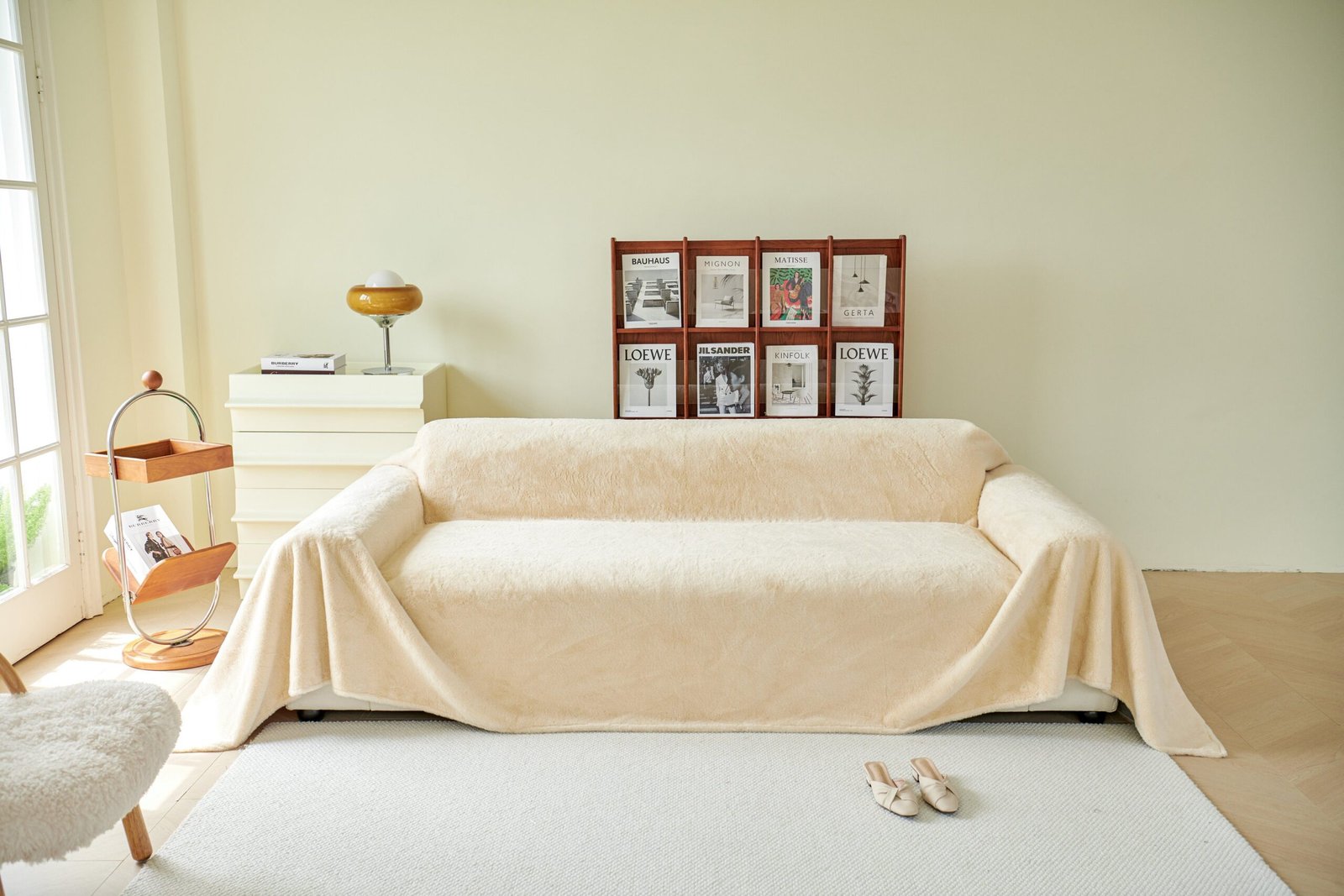
Some rooms look finished but still do not feel comfortable. The furniture is in place, the walls are painted, and yet the space feels a little flat or unwelcoming. More often than not, what is missing is not another piece of furniture, but textiles: a rug that anchors the seating, a throw within easy reach, cushions that invite you to sit down and stay a while.
Cosy textiles for living room spaces work because they add softness, warmth, and texture at exactly the points where you touch the room — underfoot, on your lap, behind your back. They are also one of the easiest things to change with the seasons, without repainting or replacing furniture. This guide explains how to choose rug sizes, layer throws, and mix cushions with confidence, so your room feels pulled together rather than piled up.
Rug Size Matters More Than Rug Pattern
It is tempting to choose a rug for its pattern first, but size is what decides whether a rug looks intentional or awkward. A rug that is too small floats in the middle of the room, disconnected from the furniture around it, and can make even a large room feel cramped. A rug that is generously sized pulls the seating together and gives the room a clear centre.
As a practical starting point, aim for the front legs of your sofa and armchairs to sit on the rug. In a typical living room, that usually means a rug that extends beyond the sofa on both sides, rather than one that just fits under a coffee table. If you have an open-plan space, the rug also helps define the seating area, separating it visually from a dining or walkway zone without needing walls or screens.
Before buying, measure the seating area and mark the rug size on the floor with painter’s tape or old sheets. Live with the outline for a day or two and check that doors can open over it, walkways stay clear, and the coffee table sits comfortably in the middle. This simple step prevents the most common rug mistake, which is guessing the size in the shop and discovering at home that it is far too small.
- Small living room: choose the largest rug the seating area allows, rather than a small decorative rug in the centre.
- Large or open-plan room: use one generous rug for the main seating group, not several small rugs that break the space up.
- Under a dining table: allow enough rug on all sides for chairs to be pulled out while staying on the rug.
- Doorways and walkways: check door clearance and keep main routes off the rug edge to avoid tripping and curling.
Pattern and colour still matter, but they work best once size is right. A plain or subtly textured rug in a warm neutral is often the most versatile base, because it lets throws and cushions carry the colour and pattern. If you love a bold pattern, let the rug be the statement and keep the rest of the textiles calmer, so the room does not feel busy. Pile height matters too: a low-pile rug is easier to clean, works better under doors, and suits homes with pets or wheeled furniture, while a deeper pile feels plusher underfoot in a bedroom or a cosy reading corner.
Layer Throws by Texture, Not Just Colour
Throws are often chosen by colour alone, but texture is what makes layering feel cosy rather than flat. A room with three smooth, similar throws in different colours can still feel thin, while a mix of knit, woven, fleece, and linen textures feels inviting even in a quiet colour palette. Texture gives the eye and the hand something to notice, and it is what makes you want to pick a throw up.
Start with one main throw for the sofa, in a texture you actually enjoy using. A chunky knit or a soft woven throw drapes well over an arm or the back of a sofa and looks good even when it is not perfectly folded. Add a second, lighter throw if you like variety — perhaps a linen or cotton throw for warmer months, or a fleece for cold evenings. The point is not to cover every seat, but to have warmth within reach where people actually sit.
Colour can then tie the throw to the rest of the room. Pick up a tone already present in a cushion, artwork, or rug, rather than introducing a completely new colour. That echo is what makes a room feel pulled together. If your room is mostly neutral, a throw is a low-commitment way to try a warmer tone — a soft rust, deep green, or warm ochre — without repainting or buying new furniture. In a calm, pared-back room, this kind of gentle warmth works particularly well; Warm Minimalist Decor Ideas for a Calm, Lived-In Home explores how soft textures and warm neutrals can make minimal spaces feel lived in rather than bare.
Cushion Numbers and Mixes That Work
Cushions are where many rooms tip from cosy into cluttered. Too few, and the sofa looks bare. Too many, and there is nowhere to sit without moving a pile first. The right number depends on the size of your sofa, but a simple rule helps: odd numbers tend to look more relaxed than even, symmetrical pairs, and leaving at least one seat’s worth of clear space matters more than filling every corner.
For a standard three-seater sofa, five cushions is a good starting point: two larger cushions at each end, one or two medium cushions in front of them, and one smaller accent cushion in the middle. For a two-seater or loveseat, three cushions usually suffice. For a large corner sofa, you may need a few more, but group them at the ends and corners rather than lining them up evenly across the whole sofa. If you find yourself moving cushions to the floor every time you sit down, you have too many.
Mixing cushions works best when there is a common thread. That thread might be a colour, a tone, or a texture, but something should link the group together. A practical mix might include:
- One plain or textured base: a solid colour or subtle weave that anchors the group and matches the sofa or rug.
- One or two patterns: a stripe, check, or simple print that adds interest without competing with everything else.
- One contrasting texture: velvet, boucle, linen, or knit to add depth and a tactile difference.
- One smaller accent: a lumbar cushion or a single bold colour that draws the eye without dominating.
Seasonal changes are easy with cushions. Swap covers rather than whole cushions: heavier velvet or wool covers for winter, lighter linen or cotton for summer. Storing spare covers flat in a drawer or basket takes far less space than storing whole cushions, and it lets you refresh the room in an afternoon. If you are planning a wider seasonal refresh, Cosy Living Room Ideas for Cold Evenings and Everyday Relaxing offers ideas for lighting, layout, and small changes that work alongside textiles.
Care and Rotation So Textiles Last
Good textiles are worth looking after, and a little routine care makes a real difference to how long they last and how good they look. Most of the damage to rugs, throws, and cushions comes not from single accidents, but from everyday wear in the same spots: the same seat, the same walkway across a rug, the same fold in a throw.
Start by reading the care label before washing anything. Many throws and cushion covers are machine washable, but some wool, velvet, or embellished items need gentler care or professional cleaning. When in doubt, wash on a cool, gentle cycle and air-dry rather than tumble-drying, which can shrink or damage fibres. For rugs, regular vacuuming is the single most useful habit, along with prompt blotting — not rubbing — of spills, which helps prevent stains setting.
Rotation is the other simple habit that extends textile life. Rotate a rug occasionally if the room layout allows, so wear is spread more evenly and sunlight fading is less concentrated on one area. Swap cushion positions from time to time, so the same cushion is not always the one everyone leans on. Refold throws differently, and air them outside on a dry day when possible, which freshens them without washing. The same seasonal thinking applies in the bedroom — How to Layer Bedding for Comfort in Every Season covers swaps and care there in more detail — and for a wider look at how textiles are made and preserved, the Victoria and Albert Museum holds extensive textile collections worth exploring.
- Vacuum rugs weekly in high-traffic rooms, and more often in homes with pets.
- Blot spills immediately with a clean cloth, working from the outside of the stain inward.
- Wash throws and cushion covers according to their labels, and air-dry where possible.
- Rotate and swap cushions and rugs periodically to spread wear and fading.
- Store out-of-season textiles clean, dry, and folded, away from damp and direct sunlight.
FAQ: Cosy Textiles
How do I choose the right rug size for my living room?
Measure your seating area and aim for the front legs of the sofa and chairs to sit on the rug, with the rug extending beyond the sofa on both sides. Mark the size on the floor with tape before buying, and check door clearance and walkways. When in doubt, choose the larger size that fits the seating group.
How many cushions should I have on a sofa?
For a three-seater sofa, five cushions is a good starting point; for a two-seater, three is usually enough. Group them at the ends and corners, mix sizes and textures, and leave clear sitting space. If you move cushions to the floor every time you sit down, you have too many.
How can I layer throws without making the room look messy?
Layer by texture rather than by adding more and more throws. Use one main throw on the sofa, folded over an arm or the back, and keep a second throw in a basket nearby rather than draped over every seat. Stick to one or two throws per seating area and a colour already present in the room.
Are washable rugs and throws worth it?
In busy family living rooms, yes. Washable or easy-clean textiles make spills and pet hair much less stressful, and they tend to get used more because nobody worries about ruining them. Check care labels before buying, and choose low-pile or sturdy weaves for high-traffic areas.
How do I make textiles feel cosy in summer as well as winter?
Swap heavy covers for lighter ones: linen or cotton cushion covers, a lighter throw, and a lower-pile rug if you change rugs seasonally. Keep the same warm base colours, but use lighter textures so the room feels soft without feeling hot.
Conclusion
Cosy textiles are not about buying more of everything. They are about choosing the right rug size, layering textures that feel good to touch, and mixing cushions in numbers that leave room to actually sit down. Get those three things right, and a room starts to feel finished in a way that furniture alone cannot achieve.
Start with the rug, because it anchors everything else. Then add one throw you love using and a cushion mix built around a single colour or texture thread. Look after what you have with regular vacuuming, prompt stain care, and occasional rotation, and swap covers with the seasons rather than replacing whole pieces. Done gradually, like that, textiles become the easiest and most enjoyable way to make a house feel like a home.
1 thought on “Cosy Textiles Guide: Rugs, Throws and Cushions That Pull a Room Together”