
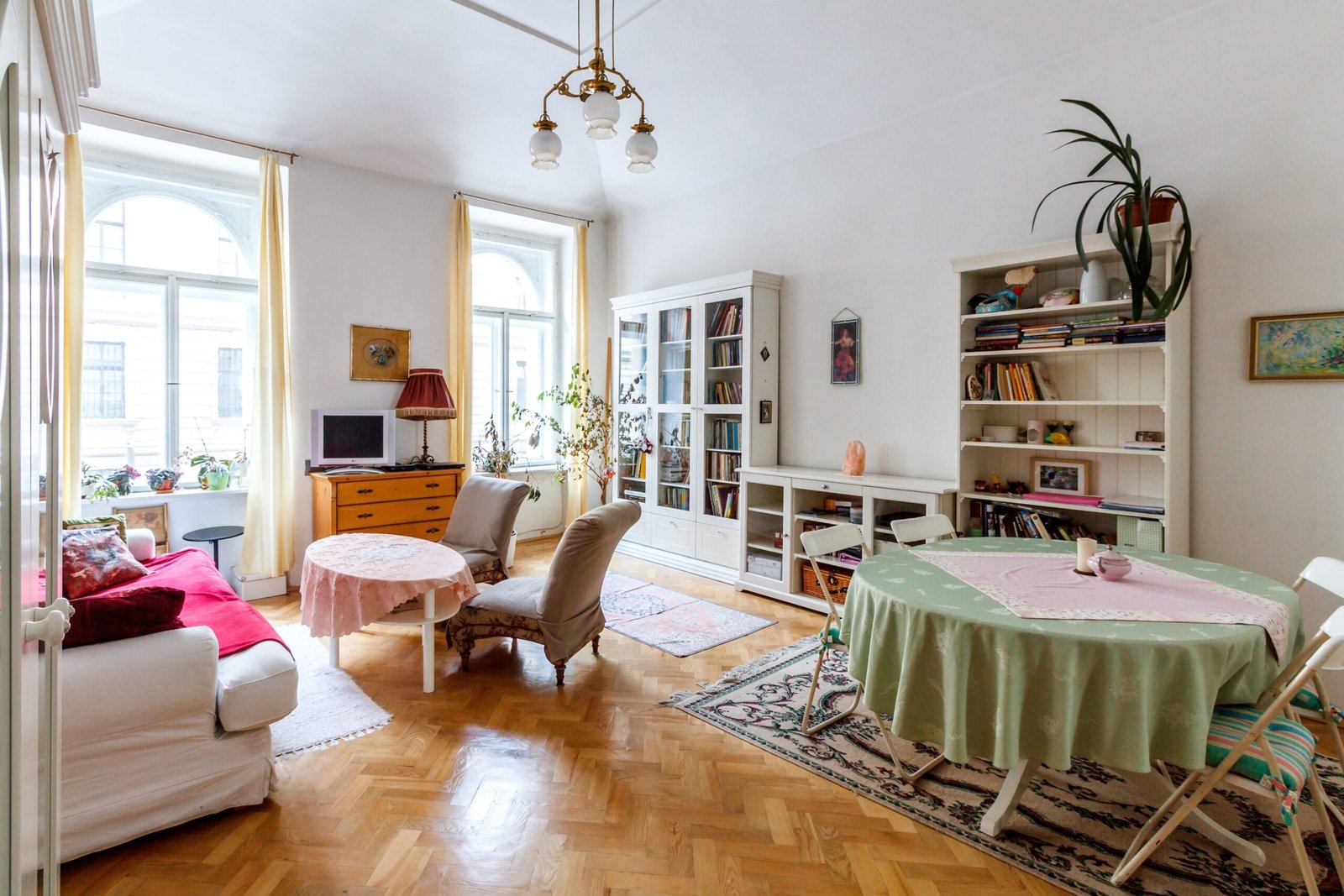
Walk into a room that feels cluttered and the problem is not always mess. The dishes might be washed and the floor vacuumed, yet the space still feels busy, cramped, and hard to relax in. That is one of the most common decorating frustrations, and it is also one of the most fixable. In most cases, a cluttered-looking room is not caused by owning too much. It is caused by how things are arranged, sized, and displayed.
When every surface is covered, every wall is filled, and every piece of furniture is pushed to the edge of the room, the eye has nowhere to rest. The result is visual noise: too many small shapes competing for attention at once. The good news is that you do not need a full makeover or a big budget to change that feeling. A few deliberate edits can make the same room feel calmer, larger, and much easier to live in. If you are wondering why does my room look messy even when it is tidy, start here.
Too Many Small Items, Not Enough Breathing Room
The single biggest culprit behind a cluttered-looking room is quantity at a small scale. A dozen tiny ornaments on a shelf, five small frames on one wall, a tray of candles, a bowl of keys, and a stack of magazines each seem harmless on their own. Together, they create a restless, broken-up surface that the eye reads as clutter.
Small items are especially tricky because they rarely look intentional in large numbers. One beautiful vase on a sideboard looks styled. Seven small trinkets crowded around it look like things that have simply accumulated there. The same is true for cushions: two or three well-chosen cushions can make a sofa look inviting, while eight competing patterns and sizes can make it look fussy and hard to sit on.
The fix is not to get rid of everything you love. It is to edit with a clear rule: fewer items, grouped with purpose, and space left around them. Try this approach:
- Take everything off one surface at a time. Start with a single shelf or sideboard rather than the whole room. An empty surface makes it much easier to see what is actually worth putting back.
- Keep the best, store the rest. Choose one to three pieces per surface that you genuinely like and that work together. Put the rest in a box for a few weeks. If you do not miss them, you probably do not need them on display.
- Leave at least a third of each surface empty. That empty space is not wasted. It is what lets the items you kept actually stand out.
Flat surfaces are magnets for clutter because they are convenient drop zones. Mail, chargers, and sunglasses land on the nearest table and stay there. Giving everyday items a real home — a small basket by the door, a drawer for chargers, a tray for keys — stops the slow creep that makes a tidy room look untidy by the end of the week. For a structured way to work through the whole house, this Decluttering Room by Room: A Practical Starter Plan breaks the job into manageable steps instead of one overwhelming clear-out.
Furniture Pushed to the Walls by Default
Pushing every piece of furniture against the walls feels like the obvious way to maximise floor space, especially in a small room. In practice, it often does the opposite. When the sofa, chairs, and tables all hug the perimeter, the middle of the room becomes a large, empty expanse that feels disconnected, while the edges feel crowded at the same time.
Instead, think in terms of zones and groupings. Pull the main seating arrangement slightly away from the walls, even if it is only by a few inches, and anchor it with a rug. A sofa with its front legs on the rug, a coffee table within easy reach, and an armchair angled toward the conversation instantly creates a defined living area.
- Leave walkways, not gaps everywhere. Aim for a comfortable path of roughly two and a half to three feet through the main routes in the room. You do not need a wide margin around every single piece.
- Float at least one piece. Even in a small room, floating a chair at an angle or pulling a side table away from the wall breaks up the line of furniture around the edges.
- Anchor with a rug. A rug under the front legs of the seating pulls the grouping together visually. Without it, individual pieces can look scattered, which reads as clutter.
- Use corners properly. A corner can hold a reading chair with a lamp and a small table — a purposeful zone — instead of becoming a dumping ground for things that do not fit anywhere else.
If rearranging feels daunting, start with just one room and one grouping. Move the seating, live with it for a few days, and adjust. You can often transform how a room feels without buying anything at all, as explained in How to Refresh a Room Without Buying New Furniture.
Scale Mistakes: Rugs, Art and Lamps
Scale is the quiet mistake that makes many rooms feel off without an obvious reason. When rugs, artwork, and lighting are the wrong size for the space, the room looks disjointed — and disjointed easily reads as cluttered, because nothing quite relates to anything else.
The too-small rug
A rug that floats in the middle of the floor, well short of the furniture, chops the room into fragments. As a general rule, the front legs of the sofa and chairs should sit on the rug, and in a dining room the rug should be large enough that chairs stay on it when pulled out. If a bigger rug is not in the budget right now, it is usually better to go without one than to use one that is clearly too small and adds another visual boundary.
Art hung too high, too low, or too small
A single small frame lost on a large empty wall looks like an afterthought, while a cluster of tiny frames scattered across a wall can look like visual static. Art generally looks best hung so its centre sits roughly at eye level, and sized in proportion to the furniture beneath it — artwork above a sofa should span a good portion of the sofa’s width rather than a narrow strip in the middle. If you have several small pieces you love, grouping them tightly as one gallery arrangement, with consistent spacing and similar frames, reads as a single intentional feature instead of a scattered collection.
Lighting that is too small or too harsh
A tiny ceiling light in a large room, or a single harsh bulb with no shade, can make a room feel both dim and glaring at the same time. Layered lighting — a ceiling light for general glow, a lamp by the seating for reading, and a small accent light in a corner — gives a room depth and warmth, and it stops the eye jumping between bright spots and dark corners. If your lighting feels off, start by checking bulb warmth and shade style before buying new fittings.
These are all proportion problems, not taste problems, and they are surprisingly easy to fix once you spot them. For a deeper look at why scale matters, Interior Design Basics: Proportion, Balance and Flow Explained Simply explains the principles in plain language.
A Room-by-Room Fix Checklist
Knowing the mistakes is one thing. Fixing them room by room is where the change happens. Use this checklist as a starting point, and work through one room at a time rather than trying to fix the whole house in a weekend.
Living room
- Remove everything from the coffee table, then put back only two or three items you use or love.
- Check the rug: front legs of the sofa and chairs should sit on it.
- Group small ornaments into one or two displays, and leave the rest of the shelves partly empty.
- Pull seating slightly away from the walls and anchor it with the rug.
Bedroom
- Clear the bedside tables to a lamp, a book, and one personal item.
- Reduce cushions to the number you actually use, and store the rest.
- Check that artwork above the bed is centred and sized in proportion to the bed.
Kitchen and dining area
- Clear counters to everyday essentials only, and find a home for small appliances you rarely use.
- Check that the dining rug, if you have one, is large enough for chairs when pulled out.
- Use one centrepiece on the table rather than a collection of small items.
For a sense of how proportion and breathing room work in a curated space, visiting a museum can be surprisingly instructive: the Metropolitan Museum of Art shows how even very full rooms can feel calm when objects are grouped with intention and given space around them.
FAQ: Fixing a Cluttered-Looking Room
Why does my room look cluttered even when it is clean?
Because clutter is often visual, not physical. Too many small items, furniture pushed to the walls, and wrong-sized rugs, art, or lamps can make a clean room feel busy. Editing surfaces, grouping objects, and fixing scale usually makes more difference than extra cleaning.
Do I need to get rid of things to fix a cluttered room?
Not necessarily. Many rooms improve dramatically just by editing surfaces, grouping items, and rearranging furniture. Start by storing excess items out of sight for a few weeks. If you do not miss them, you can let them go; if you do, you can bring them back with a clearer plan for where they belong.
What is the fastest fix for a cluttered-looking room?
Clear one surface completely, then put back only one to three items. Then check the rug size and pull seating slightly away from the walls. Those three steps — surface, rug, seating — often change a room’s feeling in under an hour.
Can a small room ever feel uncluttered?
Yes, and small rooms often benefit most from these fixes. Fewer, larger pieces, a rug that anchors the seating, and surfaces left partly empty make a small room feel larger, because the eye is not overwhelmed by many small shapes competing for attention.
Conclusion
A room that feels cluttered is rarely a sign that you own too much or that you have bad taste. More often, it is a sign that small items have accumulated without a plan, furniture has defaulted to the walls, or rugs, art, and lighting are the wrong scale for the space. Each of those problems has a practical fix that does not require a big budget or a full makeover.
Start with one room, and one surface. Edit it, group what you keep, leave space around it, and check the scale of the rug and artwork. Then move the seating into a proper grouping and see how the room changes. Done gradually, these small, deliberate changes add up to a home that feels calmer, larger, and much easier to live in — without buying anything new.
3 thoughts on “Decorating Mistakes That Make a Room Feel Cluttered — and How to Fix Them”