
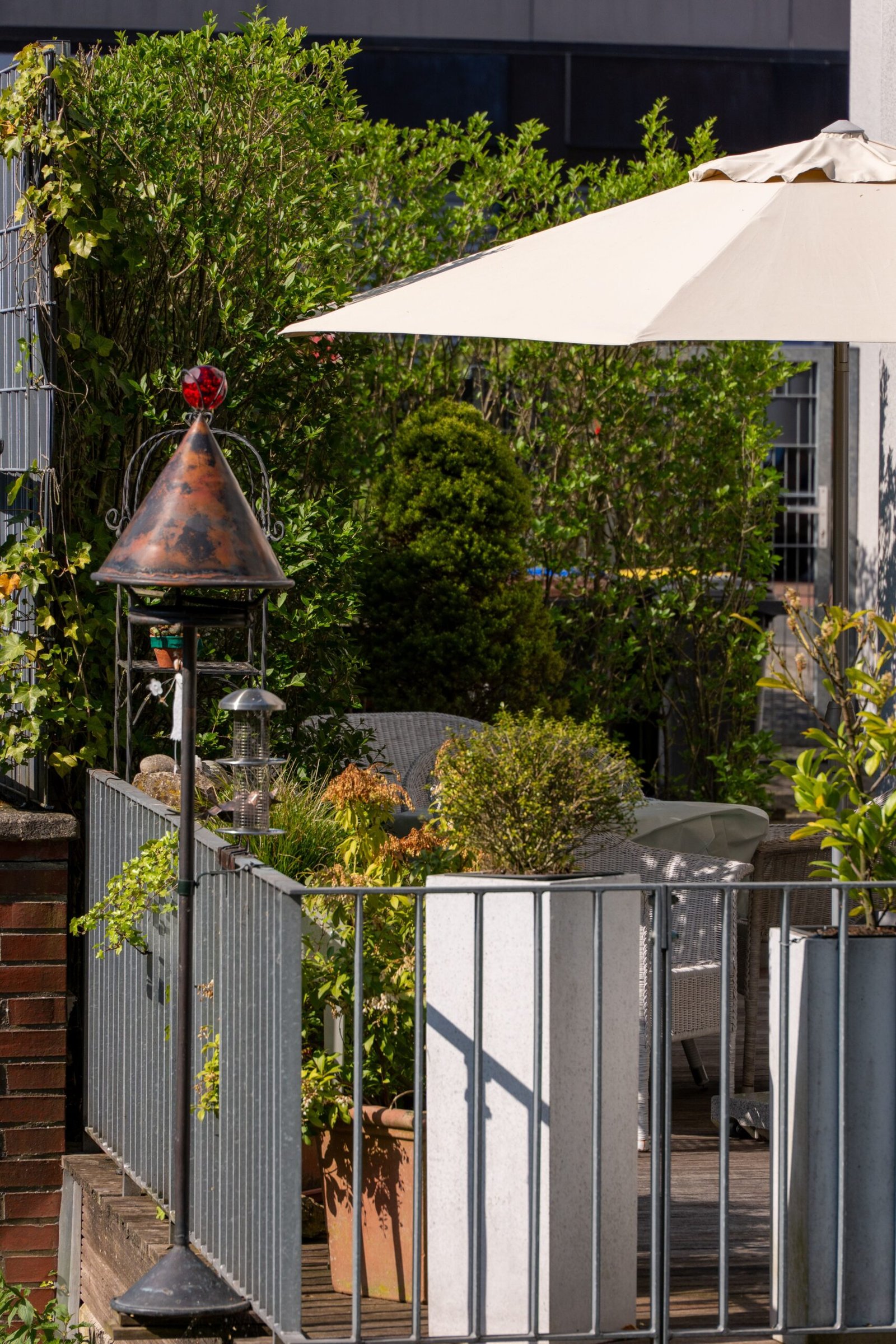
A small garden is not a lesser garden. A patio, a balcony, or a tiny plot can still give you somewhere to sit outside, something green to look at, and a few plants to tend — but only if it is planned for the space you actually have, rather than copied from a large garden. The mistake most small gardens make is trying to fit too much in: too many pots, too many plant types, and furniture sized for a lawn that does not exist. The result feels cluttered, hard to move through, and harder to look after than it should.
This guide takes the opposite approach. It starts with the conditions of your space — sun, shade, and wind — then builds up from containers and vertical growing, adds seating that fits, and finishes with a watering routine you can actually keep. The aim is a small outdoor space that feels generous, looks cared for, and stays manageable through the year.
Work With Sun, Shade and Wind First
Before buying a single plant, watch your space for a few days. Note where the sun falls in the morning and in the afternoon, which corners stay shaded, and where the wind funnels through. A south-facing balcony can be hot and dry by midday, while a north-facing patio may get only a couple of hours of direct light. Plants chosen for the wrong conditions will struggle no matter how well you water them, so matching plants to light is the single most useful thing you can do.
Wind matters just as much on balconies and exposed patios, and it is easy to underestimate. Wind dries pots out quickly, snaps tall stems, and can topple lightweight containers. If your space is windy, choose sturdy, low-growing plants, weight your pots with heavy containers or stones at the base, and consider a windbreak that filters the wind rather than blocking it outright — a trellis with climbers, for example, slows wind without creating turbulence on the other side. Solid screens can make wind worse by forcing it over the top and down into the space.
Also check the practical limits of the space itself. Balconies have weight limits, so check what your structure can carry before filling it with large, soil-filled pots, especially after rain when wet soil is at its heaviest. Drainage matters too: pots need somewhere for excess water to go, and neighbours below will not appreciate a steady drip. Saucers, drip trays, and a habit of emptying them after watering keep a balcony garden good-natured as well as green.
Containers and Vertical Growing
Containers are the obvious tool for a small garden, but how you use them matters more than how many you own. A few large containers look better and are easier to care for than many small ones: they hold more soil, dry out more slowly, and give roots room to grow. Group containers in odd numbers and at different heights — a large pot, a medium one, and a raised planter — to create a shape that reads as a garden rather than a collection of pots lined up against a wall.
Vertical growing is what turns a small footprint into a large garden. Walls, fences, railings, and trellises can carry climbers, wall-mounted planters, hanging baskets, and pocket planters, freeing the ground for seating and movement. Climbing plants such as jasmine, clematis, or ivy can soften a bare wall, but check their eventual size and vigour before planting: a climber that outgrows its support becomes a chore rather than a feature. Annual climbers, grown fresh each year from seed or small plants, are a lower-commitment way to test vertical growing.
- Use the largest containers you can fit and carry, with drainage holes and a layer of crocks or gravel at the base.
- Choose a good-quality compost and refresh the top layer each spring, rather than reusing tired compost year after year.
- Group pots by watering need — thirsty plants together, drought-tolerant plants together — so one watering routine suits the whole group.
- Keep pathways and the route to the door clear; a garden you cannot walk through comfortably will not get used.
Herbs are a natural fit for small gardens, because they are useful, compact, and forgiving. If you want to start with something edible, the Beginner’s Guide to Growing Herbs at Home covers which herbs to start with, containers, and watering basics. A small herb pot by the kitchen door is often the most-used part of a tiny garden.
Seating That Does Not Swallow the Space
Seating is where small gardens most often go wrong. A full dining set on a small patio leaves no room to move, while a single chair tucked in a corner invites no one to linger. The right choice depends on how you actually use the space: morning coffee for one, evening meals for two, or occasional gatherings. Be honest about the most common use, and furnish for that, rather than for the rare occasion.
Foldable and stackable furniture is the small garden’s best friend. A bistro set — two chairs and a small table — fits most balconies and can be folded away when the space is needed for something else. A bench against a wall, with storage underneath, gives seating without legs and chairs scattered across the floor. Built-in or wall-mounted options, such as a fold-down table fixed to a wall or railing, can give you a surface for meals without permanently claiming floor space.
Comfort matters as much as size. A chair that is the right height, with a cushion that stays put, will be used far more than a stylish chair that is hard to sit in. Outdoor cushions in a weather-resistant fabric, stored in a small box or brought inside, last longer and make the space feel like a room rather than a yard. And a small amount of shade — an umbrella, a sail, or a climber overhead — makes seating usable on hot days, which is when you most want to be outside. Turning a patio into a genuinely usable outdoor room is covered in more detail in Outdoor Living Ideas: Turning a Patio Into an Extra Room.
Keep a Tiny Garden Easy to Water
Watering is the routine that makes or breaks a small garden. Pots dry out far faster than garden beds, especially in sun and wind, and a few hot days without water can undo weeks of growth. The solution is not heroic effort but a system: group pots together so watering is one job, not a tour of the whole space; water in the morning or evening, when less evaporates; and water thoroughly, until it runs from the drainage holes, rather than giving each pot a little sprinkle that wets only the surface.
Self-watering pots, drip irrigation kits, and simple timer systems are worth considering, especially for balconies where a holiday or a busy week can otherwise mean dead plants. A basic drip kit, connected to an outdoor tap or a water butt, can keep a small collection of pots alive with minimal attention. Even without technology, a neighbour-watering arrangement — you water theirs, they water yours — is a reliable, low-cost system. Mulching the surface of pots with bark or gravel also slows evaporation and keeps the soil cooler.
Finally, accept that a small garden changes through the year, and plan for it. Annuals will finish, perennials will die back, and some plants will simply not suit your space despite your best efforts. Replacing a failed plant is not a failure of gardening; it is gardening. Keep the structure — the containers, the seating, the vertical supports — and let the planting evolve. A small garden that is easy to water, easy to sit in, and easy to adjust is one that will still be green and used in a year’s time. For readers working with a whole flat as well as a balcony, Small Living Space Design: Layouts That Make a Flat Feel Larger covers the same small-space thinking indoors.
FAQ: Small Gardens
What grows best on a small balcony?
Compact, container-friendly plants that suit your light: herbs, salad leaves, trailing plants, and dwarf shrubs. Start with a few forgiving plants and add more only once you know how quickly your pots dry out.
How do I stop pots drying out so fast?
Use large pots, group them together, mulch the surface, and water thoroughly in the morning or evening. Self-watering pots or a simple drip kit help a great deal in hot or windy spots.
Can I have seating and plants on a tiny patio?
Yes, if you furnish for your most common use and grow vertically. A bistro set or a wall bench, plus climbers and wall planters, keeps the floor clear while the garden grows upwards.
What if my balcony is very windy?
Choose low, sturdy plants, use heavy pots, and filter the wind with a trellis and climbers rather than a solid screen. Move fragile plants to the most sheltered corner.
Conclusion
A small garden works when it is planned around its real conditions: sun, shade, and wind first; containers and vertical growing second; seating sized for the space; and a watering routine you can keep. Start small, grow what suits the space, and let the garden evolve.
Pick one corner this weekend — a pot, a chair, a trellis — and make it a place you want to sit. A tiny garden that gets used every day is worth far more than a large one that does not.
3 thoughts on “Small Garden Ideas for Patios, Balconies and Tiny Plots”