
Drafts, squeaks, and sticking doors are the small annoyances that, left alone, become daily irritations: a cold draught across a hallway, a hinge that announces every movement, a door that must be forced shut or that will not stay closed. They are also, in most cases, easy to diagnose and fix, provided the diagnosis comes first. A squeak fixed with oil when the real problem is a loose hinge will return; a sticking door planed down when the real problem is humidity will be too small when the weather changes.
This guide follows a diagnose-first approach. It explains how to tell what is causing a draft, a squeak, or a sticking door, and then how to fix each cause with the appropriate method. It also notes the boundaries: doors that are structurally damaged, frames that have moved significantly, or problems that affect several doors at once may indicate a larger issue that needs professional assessment rather than a DIY fix.
Diagnose Before You Fix
For a squeak, open and close the door slowly and listen for where the sound comes from. A squeak from a hinge is usually rhythmic and tied to the door’s movement, while a squeak from the latch or the frame may occur only at a particular point in the swing. Try lifting the door slightly while moving it: if the squeak changes or stops, the hinges are likely bearing weight unevenly. Try moving the door by the handle versus by the edge: if the sound differs, the hinges may be loose or misaligned rather than merely dry.
For a sticking door, note when and where it sticks. A door that sticks only in damp weather and frees up when it dries is responding to humidity, which swells timber. A door that sticks in the same place all year round, and that shows a rub mark on the frame or the edge, is more likely misaligned or swollen in one spot. A door that sticks after a change — new flooring, a new carpet, or a door that has been removed and refitted — may simply be too large for its new clearance. Each pattern points to a different fix, and fixing the wrong cause can make the problem worse.
Check the frame and hinges before doing anything to the door itself. Look for loose screws, hinges that have pulled away from the frame, a frame that is out of square, and paint build-up that has narrowed the gap. A surprising number of door problems are hinge or frame problems, not door problems, and they are easier and less destructive to fix. Only when the hinges and frame are sound should you consider altering the door itself, and even then, the alteration should be minimal and reversible where possible.
Drafts: Seals and Gaps
Most draughts around internal and external doors are caused by gaps between the door and its frame, and the fix is draught-proofing: a compressible strip that fills the gap when the door is closed, without preventing the door from closing. Self-adhesive foam strips are the simplest option for internal doors and for windows, while brush strips and rubber seals are more durable for external doors, where weather and frequent use wear foam strips quickly. Choose a strip that matches the gap: a strip too thin will not seal, while a strip too thick will prevent the door from closing or will wear out quickly from compression.
Apply draught-proofing to a clean, dry surface, pressing it firmly into place along the frame, not the door, so that it is compressed when the door closes. Test the door after fitting: it should close fully and latch without force, and the draught should be gone. If the door will not latch, the strip is too thick or is positioned where it interferes with the latch; if the draught remains, the strip is too thin or there is another gap elsewhere. Draught-proofing is a trial-and-adjust job, and it is worth taking the time to get it right, because a poorly fitted strip is worse than none: it prevents the door from closing properly while failing to seal.
Other draught routes deserve attention too. A letterbox without a brush or flap, a keyhole without a cover, and gaps around a door frame where it meets the wall can all let in cold air, and each has a simple fix: a letterbox draught excluder, a keyhole cover, and sealant or filler for frame gaps. These are small jobs, but they complete the seal, and a door that is draught-proofed around its edges but not at its letterbox will still feel draughty. Draught-proofing, done thoroughly, is also one of the first energy-saving improvements a home can make, as discussed in Energy-Saving Home Improvements That Pay Off Over Time, and the general repair skills involved are covered in Easy DIY Repairs Every Homeowner Should Know How to Do.
Squeaks: Hinges and Moving Parts
Most squeaks come from hinges, and the simplest fix is lubrication. A light machine oil or a silicone-based lubricant, applied sparingly to the hinge pin and worked in by opening and closing the door several times, will silence many squeaks immediately. Apply the oil to the top of the hinge, let it run down the pin, and wipe away excess, because oil that drips onto paintwork or flooring is messy and can stain. Avoid over-oiling, which attracts dust and can make the hinge stiff over time rather than freer.
If lubrication does not fix the squeak, the hinge pin itself may be the problem. A pin that is bent, rusted, or worn will squeak no matter how much oil is applied, and it should be removed, cleaned, and inspected. To remove a pin, support the door, tap the pin upwards from underneath with a hammer and a nail or a pin punch, and slide it out. Clean it with a cloth and fine sandpaper if it is rusty, lubricate it lightly, and reinsert it. If the pin is bent or badly worn, replace it with a matching pin, because a bent pin will damage the hinge knuckles over time.
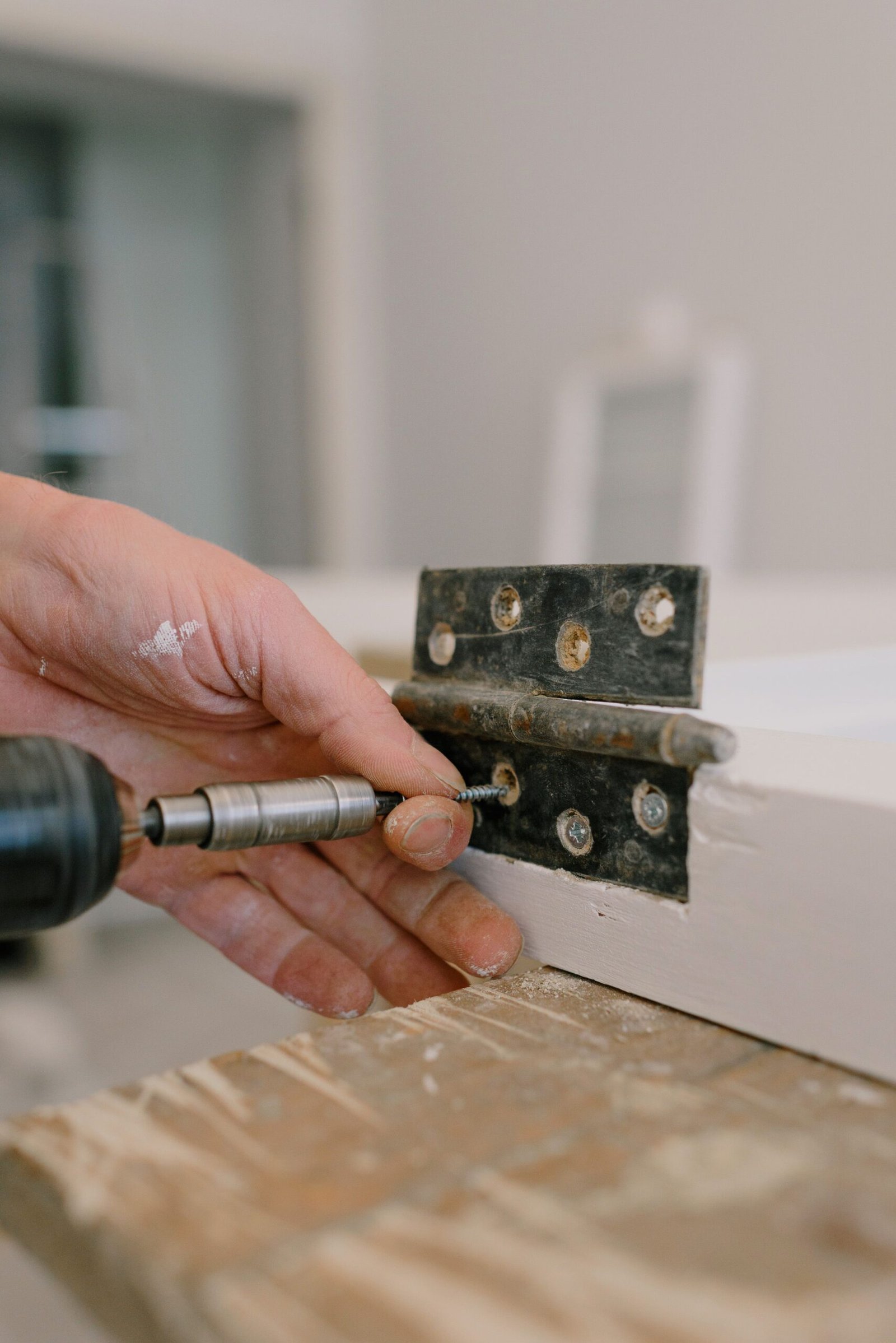
Loose hinges are another common cause of squeaks, and they are fixed by tightening the screws. If a screw no longer grips because its hole has worn, the hole can be repaired by filling it with a small wooden dowel or a matchstick glued in place, allowing it to dry, and then re-screwing into the repaired hole. This is a simple, durable fix that restores the hinge’s grip without replacing the door or frame. Check all hinges on the door, not just the one that squeaks, because a door hung on three hinges distributes its weight across all three, and one loose hinge puts extra strain on the others.
Sticking Doors: Humidity, Hinges and Alignment
A door that sticks because of humidity needs a different approach from a door that sticks because of misalignment. Humidity causes timber to swell, particularly in bathrooms, kitchens, and external doors exposed to wet weather, and the swelling is often seasonal: the door sticks in damp months and frees up when the air dries. The fix for a seasonal sticking door is patience and minimal intervention, because planing the door down to fit its swollen state will leave it too small and draughty when it dries. Improving ventilation in the room, and allowing the door to dry, will often resolve the problem without any alteration to the door itself.
If a door sticks in the same place all year round, the cause is more likely a local swelling, a paint build-up, or misalignment. Mark the sticking point with a pencil, close the door slowly to confirm where it rubs, and check whether the rub is on the edge, the top, or the bottom. A small amount of material can then be removed from the marked area with sandpaper or a plane, taking off a little at a time and testing frequently. The aim is to remove the minimum necessary to free the door, while preserving a consistent gap around it, because over-planing creates a draught and a visible gap that is harder to fix than the original sticking.
Hinge adjustment is often a better fix than planing. Tightening a loose hinge, replacing a worn screw, or adjusting a hinge by adding a thin cardboard shim behind one hinge leaf can change the door’s alignment enough to free it without removing any timber. A door that sags — one whose top corner rubs on the latch side while the bottom corner has a large gap — is a classic hinge problem: the top hinge has worked loose under the door’s weight, and tightening or repairing it will lift the door back into alignment. Always try hinge fixes before planing, because they are reversible and they address the cause rather than the symptom.
Finally, consider whether the sticking is caused by a change in the home rather than the door itself. New flooring or a new carpet that is thicker than the old one will reduce the clearance under a door, and the fix may be to trim the bottom of the door slightly, or to adjust the threshold, rather than to alter the door’s sides. A door that was removed for decorating and refitted slightly out of alignment may simply need its hinges reseated. In each case, the principle is the same: diagnose the change, fix the cause, and alter the door itself only as a last resort, minimally and patiently. For readers tackling a batch of small home jobs in one go, this diagnose-first approach fits well with a planned weekend, as described in Home Improvement Projects You Can Finish in a Weekend.
FAQ: Drafts, Squeaks and Sticking Doors
Should I plane a door that sticks in winter?
Usually not, if the sticking is seasonal. Timber swells in damp weather and shrinks when it dries, so a door planed to fit its winter size will be too small and draughty in summer. Improve ventilation, allow the door to dry, and only plane a door that sticks in the same place all year round, removing the minimum necessary.
What is the best lubricant for squeaky hinges?
A light machine oil or a silicone-based lubricant, applied sparingly to the hinge pin and worked in by moving the door. Avoid heavy grease, which attracts dust, and wipe away excess oil so it does not stain paintwork or flooring.
How do I find where a draught is coming from?
Move a hand slowly around the door’s edges on a windy day, or watch a thin tissue strip, used safely away from flammable materials, to see where air moves. Note whether the draught is around the whole frame, at the bottom, or at the letterbox or keyhole, because each location points to a different fix.
When should I call a professional about a door?
When the frame has moved significantly, when several doors stick at once, when the door or frame is structurally damaged, or when a fix involving hinges and planing has not resolved the problem. Those patterns may indicate a larger structural issue that needs assessment rather than a DIY repair.
Conclusion
Drafts, squeaks, and sticking doors are rarely mysterious once they are observed carefully. Diagnose first: find where the draught enters, where the squeak originates, and when and where the door sticks. Then fix the cause — seals and gaps for draughts, lubrication and hinge repair for squeaks, hinge adjustment and minimal trimming for sticking — rather than treating the symptom.
Done this way, three of the most common household annoyances become three of the most satisfying small repairs: quick, inexpensive, and immediately noticeable every time the door is used.
1 thought on “How to Fix Common Drafts, Squeaks and Sticking Doors”