
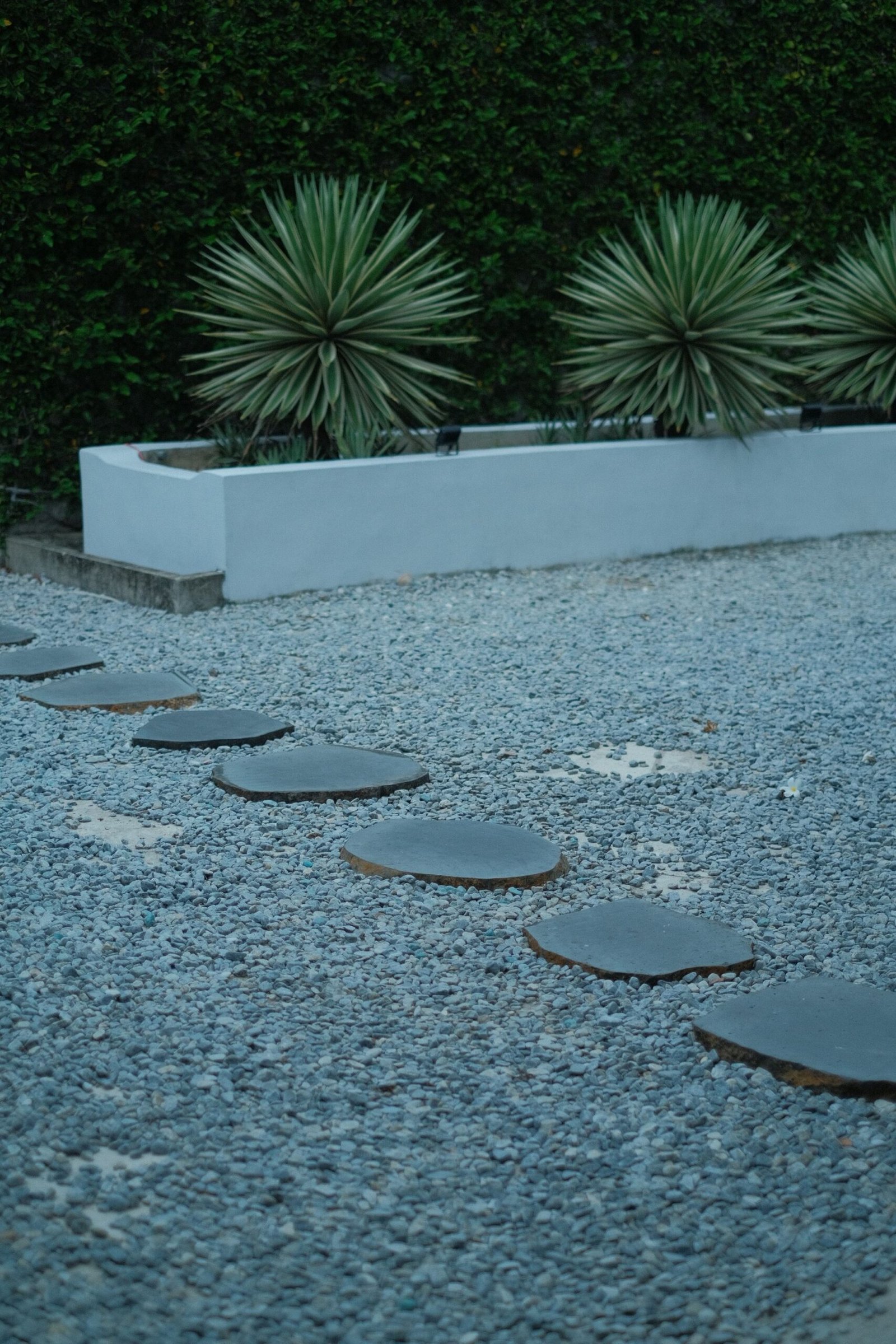
Low maintenance does not mean no maintenance. Every garden needs some care, and a garden promised as maintenance-free usually becomes a neglected garden within a season or two. What low maintenance really means is a garden designed so that the work it does need is small, infrequent, and easy to fit into ordinary life: less mowing, less watering, less weeding, and fewer plants that demand constant attention to look good.
This guide explains how to design for that. It covers choosing planting that largely looks after itself, using mulch, edges, and paths to cut weeding and mowing, and building a short seasonal routine that keeps the garden looking cared for without taking over your weekends. The result should be a garden you enjoy, not a garden you resent.
What Low Maintenance Really Means
Start by being honest about how much time you want to spend. An hour a month is a very different garden from an hour a week, and both are perfectly reasonable. The most common low-maintenance mistake is designing a garden for an imaginary gardener with far more time and enthusiasm than the real one. A garden that needs an hour a week but gets an hour a month will always look neglected, while a garden designed for an hour a month will look cared for on the same effort.
Low maintenance also means accepting trade-offs. A garden with fewer plant types, more ground cover, and more hard landscaping will need less work, but it will also be less varied than a garden packed with delicate plants. That is not a loss: a simple garden, well kept, looks better than a complex garden half kept. The aim is a garden whose default state, with minimal input, is tidy and green, rather than one whose default state is overgrown.
Finally, low maintenance is a design choice, not a plant shopping list. No single plant makes a garden low maintenance; the combination of planting, surfaces, edges, and access does. A garden that is easy to mow, easy to reach, and easy to water will always be easier to keep than a garden with awkward corners, narrow gaps, and plants that need reaching over beds to prune. Design the work out first, then choose plants to fit.
Planting That Looks After Itself
The lowest-maintenance plants are the ones that suit your soil, light, and rainfall without fuss. A plant struggling in the wrong conditions needs feeding, watering, and nursing; the same plant in the right spot largely looks after itself. Local garden centres and neighbours’ gardens are a better guide than glossy catalogues: plants that thrive nearby, without obvious pampering, are the ones likely to thrive for you.
Ground cover is the low-maintenance gardener’s best tool. Plants that spread to cover bare soil — creeping thyme, low-growing sedums, hardy geraniums, and similar — suppress weeds by shading the soil, reduce evaporation, and look green for most of the year. A bed covered in ground cover needs far less weeding than a bed of bare soil with a few shrubs in it, because weeds have nowhere to establish. Use ground cover under and between larger plants, not just as a feature on its own.
Choose structure that holds through the year. Evergreen shrubs, ornamental grasses, and trees with good shape give a garden form in winter, when herbaceous plants have died back, so the garden does not look empty for months. A few reliable shrubs, repeated through the garden, look more intentional than a large collection of one-off plants, and they are easier to learn: once you know how to prune one, you know how to prune them all. Avoid plants known for vigorous self-seeding or suckering unless you are happy to spend time controlling them, and be wary of fast-growing hedges that need cutting several times a year.
- Repeat a small palette of reliable plants rather than collecting many different ones.
- Plant in drifts and groups, so gaps fill in and weeds have less bare soil to colonise.
- Right plant, right place: sun-lovers in sun, shade-tolerant plants in shade, and nothing that needs constant watering in a dry spot.
- Keep lawns small and simple in shape, so mowing is quick and edges are easy to trim.
Mulch, Edges and Paths
Mulch is the single most effective low-maintenance technique after plant choice. A thick layer of bark, compost, or gravel over bare soil suppresses weeds, keeps moisture in, and improves the soil as it breaks down. Apply mulch in spring, after weeding, to a depth that actually smothers weeds — a thin scattering does little — and top it up once a year. Mulched beds need far less weeding and watering than bare beds, and they look finished even before the plants fill in.
Edges are the detail that makes a garden look cared for with little effort. A crisp edge between lawn and bed, maintained with a spade or an edging tool a few times a year, makes the whole garden look intentional. Permanent edging — metal, brick, or stone strips set into the ground — reduces even that work, because the edge holds its line and mowing can run straight up to it. Without a defined edge, lawn creeps into beds and beds spill onto lawn, and the garden looks untidy even when the plants are healthy.
Paths and hard surfaces also cut work, provided they are laid properly. A path that is wide enough to walk comfortably, level, and well drained is used daily and needs little more than an occasional sweep. Weed-suppressing membrane under gravel, and pointing between paving slabs, reduce weeds in joints — the most tedious weeding job of all. But hard surfaces need balance: too much paving can make a garden hot, hard, and unwelcoming, and rainwater needs somewhere to go. Aim for a mix of planting and surfacing, with planting doing the softening and surfaces doing the practical work.
A seasonal rhythm keeps all of this on track, and a year-round checklist makes it easy to remember what matters when. Seasonal Garden Care: A Simple Year-Round Checklist organises garden tasks by season, so nothing important is forgotten and nothing is done at the wrong time. If your space is small, the same low-maintenance principles apply at a smaller scale, as covered in Small Garden Ideas for Patios, Balconies and Tiny Plots.
A Short Seasonal Routine
The low-maintenance routine is deliberately short. In spring, mulch beds, cut back dead growth, and check edges and paths after winter. In summer, water only where needed — new plantings and containers first — and deadhead or cut back anything that has finished flowering if you want a second flush. In autumn, clear leaves from lawns and paths, cut back perennials that have died down, and plant any new shrubs or trees while the soil is still warm. In winter, do very little: protect tender plants from hard frost, plan changes for spring, and leave the garden largely alone.
That routine, done consistently, is enough for most low-maintenance gardens. The key word is consistently: a garden that gets a short session each season stays on top of weeds and growth, while a garden ignored for a year needs a major clearance before any routine can work. Put the seasonal jobs in a diary or on a calendar, and treat them as appointments rather than intentions. A single Saturday morning per season is a realistic commitment for most households, and it is far more effective than a grand annual blitz.
One more habit completes the routine: deal with problems while they are small. A weed pulled when it is young takes seconds; the same weed, established and seeding, takes minutes and leaves more behind. A shrub pruned lightly each year keeps its shape; the same shrub, left for five years, needs heavy cutting and looks bare afterwards. Little and often is the whole philosophy of low-maintenance gardening, and it applies to the front of the house as much as the back — see How to Improve Your Home’s Curb Appeal on a Budget for the same approach at the entrance.
FAQ: Low-Maintenance Gardens
Is a low-maintenance garden possible with no work at all?
No. Every garden needs some care, but a well-designed one needs only a short session each season: mulching, edging, and dealing with weeds while they are small.
What is the best way to reduce weeding?
Cover bare soil. Ground-cover plants and a thick mulch layer shade the soil so weeds struggle to establish, and defined edges stop lawn and beds creeping into each other.
Should I get rid of my lawn to save work?
Not necessarily. A small, simply shaped lawn is quick to mow and gives a green, usable surface. Replacing a large, awkward lawn with planting and paths saves more work than removing a small one.
Which plants need the least attention?
Plants that suit your soil and light without fuss, especially hardy shrubs, ornamental grasses, and ground cover. Plants thriving in neighbours’ gardens without obvious pampering are a good guide.
Conclusion
A low-maintenance garden is designed, not bought: reliable planting that suits the spot, ground cover and mulch to suppress weeds, clear edges and practical paths, and a short seasonal routine done consistently. Accept that some care is always needed, and design so that the care is small and easy.
Start with one bed — mulch it, edge it, and fill gaps with ground cover — and see how much less work it needs. That one bed is the model for the rest of the garden.
2 thoughts on “How to Create a Low-Maintenance Garden That Still Looks Cared For”