
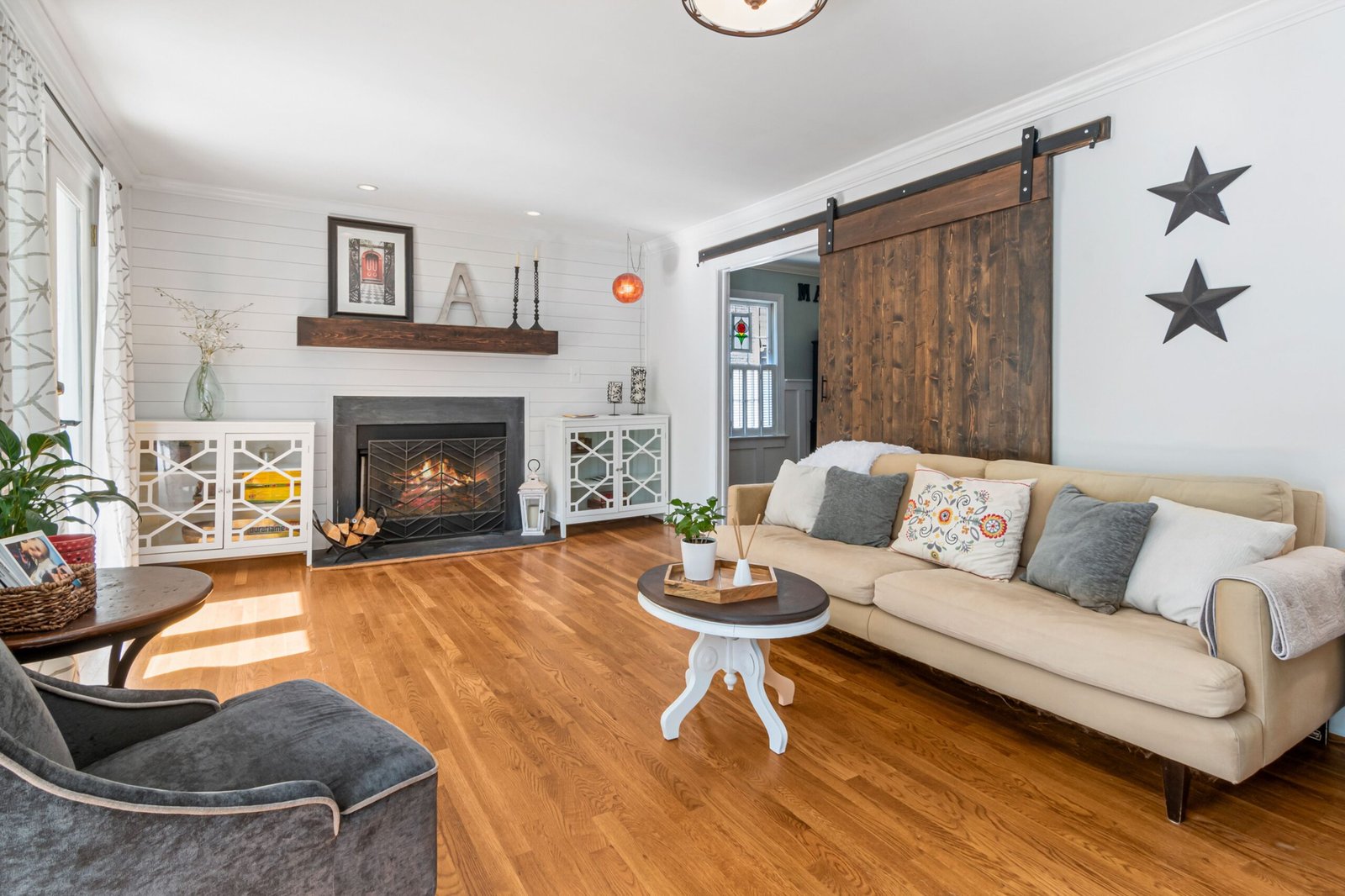
Modern farmhouse has become one of the most popular home styles of recent years, and also one of the most misunderstood. At its best, it is warm, relaxed, and genuinely comfortable: natural wood, soft linen, simple shapes, and rooms that feel lived in rather than staged. At its worst, it turns into a checklist of matching signs, distressed finishes, and themed accessories that all say the same thing.
The difference is not about spending more or following a stricter set of rules. It is about where the warmth comes from. In a good modern farmhouse home, warmth comes from materials, light, and craftsmanship — the grain of a wooden table, the softness of a woollen throw, the patina of a well-used chair. In a clichéd version, warmth is spelled out on the wall, repeated in every room, until the house feels more like a shop display than a home.
This guide shows how to keep the best of modern farmhouse style ideas — a warm, modern rustic home style — while leaving the clichés behind. It looks at what makes farmhouse feel modern, why materials matter more than motifs, how to handle colour and texture, and which rooms suit the style best. The result should feel personal and timeless, not themed and dated.
What Makes Farmhouse Feel Modern
Traditional farmhouse style grew out of practical, rural homes: sturdy furniture, natural materials, and rooms built for everyday family life. Modern farmhouse keeps that practical, welcoming spirit but strips away the fuss. Lines are cleaner, rooms are lighter, and there is more breathing space. A modern farmhouse living room might still have a wooden coffee table and a comfortable sofa, but it will not be crowded with ornaments, and the colours will be softer and more restrained.
The modern part also shows in how rooms are used. Open-plan living, a kitchen that flows into a dining area, and furniture chosen for comfort as much as for looks all belong to the modern side of the style. A farmhouse kitchen, for example, works best when it is easy to cook, eat, and gather in, not when it is dressed up to look like a picture of a farmhouse kitchen. Function comes first; the farmhouse feeling should follow naturally from honest materials and good proportions.
Perhaps the most important shift is from decoration to atmosphere. Instead of announcing a theme, a modern farmhouse home creates a feeling: calm, warm, and a little bit rustic, without shouting about it. That feeling comes from a few strong choices — a solid wood table, linen curtains, a stone fireplace or a simple wooden mantel — rather than dozens of small themed items. When in doubt, choose one good piece over five decorative ones.
Materials Over Motifs
If there is one rule that will keep modern farmhouse style from tipping into cliché, it is this: choose materials, not motifs. Wood, stone, linen, wool, cotton, iron, and ceramics all carry the farmhouse feeling on their own, without needing a word, a picture, or a symbol to explain them. A room built from these materials will feel farmhouse-like even if nothing in it is labelled as such.
Start with wood, because it does most of the work. Oak, pine, and walnut, used with their grain visible, bring warmth and character to floors, tables, shelving, and beams. Mixing wood tones can work beautifully, provided the tones are in the same warm family and one tone dominates — a guide to mixing wood tones in one room explains how to do this without the result looking accidental. Avoid wood that is heavily distressed or artificially aged just for effect; real wear from use has a different, more believable character.
Then layer in softer materials. Linen curtains, a cotton or wool throw, a jute rug, and ceramic bowls or vases add texture without adding theme. Metal should be used sparingly and honestly: black iron hardware, a simple pendant light, or a cast-iron pan displayed in the kitchen all feel appropriate, while shiny, novelty metalwork can quickly feel like costume. Stone, whether in a fireplace, a worktop, or a simple tiled floor, grounds the room and pairs naturally with wood.
Materials that carry the style
- Visible-grain wood for tables, floors, and shelving — warm, solid, and unpretentious.
- Natural fibres such as linen, cotton, wool, and jute for curtains, bedding, and rugs.
- Stone and ceramic for fireplaces, worktops, tiles, and handmade-feeling tableware.
- Simple iron or aged brass for hardware, lighting, and small accents, used sparingly.
Choosing modern farmhouse decor without signs is the simplest test of this approach. The motifs to avoid are the ones that repeat a message rather than adding anything useful: word signs, matching slogan cushions, and sets of themed accessories bought all at once. One or two personal items — a family photograph, a handmade piece, something found on a trip — will say far more about a home than a wall of generic phrases. Institutions such as the Victoria and Albert Museum celebrate exactly this kind of honest craftsmanship and material quality, which is a good touchstone when choosing pieces.
Colour and Texture in a Modern Farmhouse
Colour in a modern farmhouse should feel like it came from nature: warm whites, soft creams, pale greys, sage green, dusty blue, and warm earthy tones such as terracotta or clay. These colours sit comfortably together and let natural materials take centre stage. Bright, saturated colours can still appear, but as accents — a deep green cushion, a terracotta pot, a navy throw — rather than as the main event.
Start with a light, warm neutral for walls and larger furniture, then add depth gradually. A cream wall with an oak table and a beige sofa is a calm base; sage green in a cushion and a plant, or a warm brown in a leather chair and a wooden frame, adds interest without overwhelming the room. As with any restrained palette, repeat each accent colour at least twice in a room so it looks intentional rather than accidental.
Texture is what stops a neutral farmhouse room from feeling flat. In fact, texture does more work here than colour does. Mix rough and smooth: a chunky knitted throw over a smooth linen sofa, a rough stone hearth beside a polished wooden floor, a woven basket next to a ceramic lamp. Aim for three or four distinct textures in a room, repeated in different places, so the space feels layered and comfortable. This warm, layered approach shares much with warm minimalist decor ideas, which also relies on texture rather than decoration to create interest.
A common mistake is to paint everything white and then add farmhouse accessories to compensate. A room that is all white, all smooth, and all new will feel stark, not farmhouse-like, however many rustic items are added. Warmth needs to be built into the larger surfaces first — wood floors, linen curtains, a textured rug — before smaller details can make a difference.
Rooms Where It Works Best
Modern farmhouse is a whole-home style, but it suits some rooms more naturally than others, and it helps to know where to lean into it and where to hold back.
The living room is the easiest place to get it right. For a warm farmhouse living room, start with a comfortable sofa in a natural fabric, a solid wood coffee table, a rug underfoot, and layered lighting create a room that invites people to sit down and stay. Keep the layout relaxed rather than formal: seating grouped for conversation, a side table within reach, and space for books, blankets, and everyday life. This is also where family-friendly choices matter most, and the guide to family-friendly living room ideas shows how to keep a room looking smart while still standing up to daily use.
Kitchens and dining rooms are the heart of the farmhouse idea, and they benefit from the same material-first approach. Open shelving can work, but only if it holds things you genuinely use — everyday plates, glasses, and bowls — rather than a display of matching themed items. A large wooden dining table, simple chairs, and a pendant light or two will do more for the feeling of the room than any amount of wall decoration. Keep worktops clear enough to cook on, and let the materials, not the accessories, set the tone.
Bedrooms suit a softer version of the style: linen bedding in a warm neutral, a wooden bed frame or bedside table, a woven basket, and a soft rug beside the bed. Avoid turning the bedroom into a themed display; a calm, comfortable room with natural textures will feel more farmhouse-like than one crowded with rustic ornaments. Bathrooms, by contrast, are best kept simple: a wooden stool or shelf, a stone or ceramic basin, and soft towels are enough, without trying to recreate a rural bathroom in full.
Finally, remember that modern farmhouse does not have to fill every room. A hallway, a home office, or a small bedroom can borrow the palette and materials — warm wood, linen, soft neutrals — without adopting the full style. That restraint is what keeps the home feeling coherent and modern, rather than themed from front door to back.
FAQ: Modern Farmhouse Style
What is modern farmhouse style?
It is a relaxed, warm style that combines the natural materials and practical comfort of traditional farmhouse homes with cleaner lines, lighter colours, and more open, modern layouts. The emphasis is on wood, linen, stone, and texture rather than on rustic decoration.
How do I avoid modern farmhouse clichés?
Let materials do the work instead of motifs. Choose visible-grain wood, natural fibres, and stone or ceramic, and skip word signs, matching slogan accessories, and themed sets bought all at once. A few personal, handmade, or genuinely useful items will feel far more authentic.
Can modern farmhouse work in a flat or a new-build home?
Yes. You do not need beams, a fireplace, or a rural setting. Warm wood furniture, linen curtains, a natural rug, and a soft neutral palette can bring the feeling to any home, including a flat. Focus on texture and materials, which work in any space, rather than on architectural features you do not have.
What colours suit a modern farmhouse?
Warm whites, creams, pale greys, sage green, dusty blue, and earthy accents such as terracotta or clay. Start with a light neutral base, add one or two muted accents, and repeat each accent at least twice in a room so the palette feels intentional.
Is modern farmhouse going out of style?
Styles built on natural materials and comfortable, practical rooms tend to age better than styles built on themed decoration. A modern farmhouse home that relies on wood, linen, and texture rather than on slogans and matching sets is much less likely to feel dated, because its appeal comes from warmth and quality rather than from a trend.
Conclusion
Modern farmhouse without the clichés is really just modern farmhouse done well. It keeps the warmth, the natural materials, and the relaxed, family-friendly feeling, and leaves behind the signs, slogans, and matching sets that turn a home into a theme. Choose materials over motifs, build colour and texture slowly from a calm neutral base, and let each room earn its farmhouse feeling through comfort and craftsmanship rather than decoration.
Start with one room, and with the largest surfaces first: the table you eat at, the sofa you sit on, the rug under your feet. When those pieces are made from honest materials and chosen because you like living with them, the style will take care of itself — and your home will feel warm, modern, and personal, without a single cliché in sight.
1 thought on “Modern Farmhouse Style Without the Clichés”