
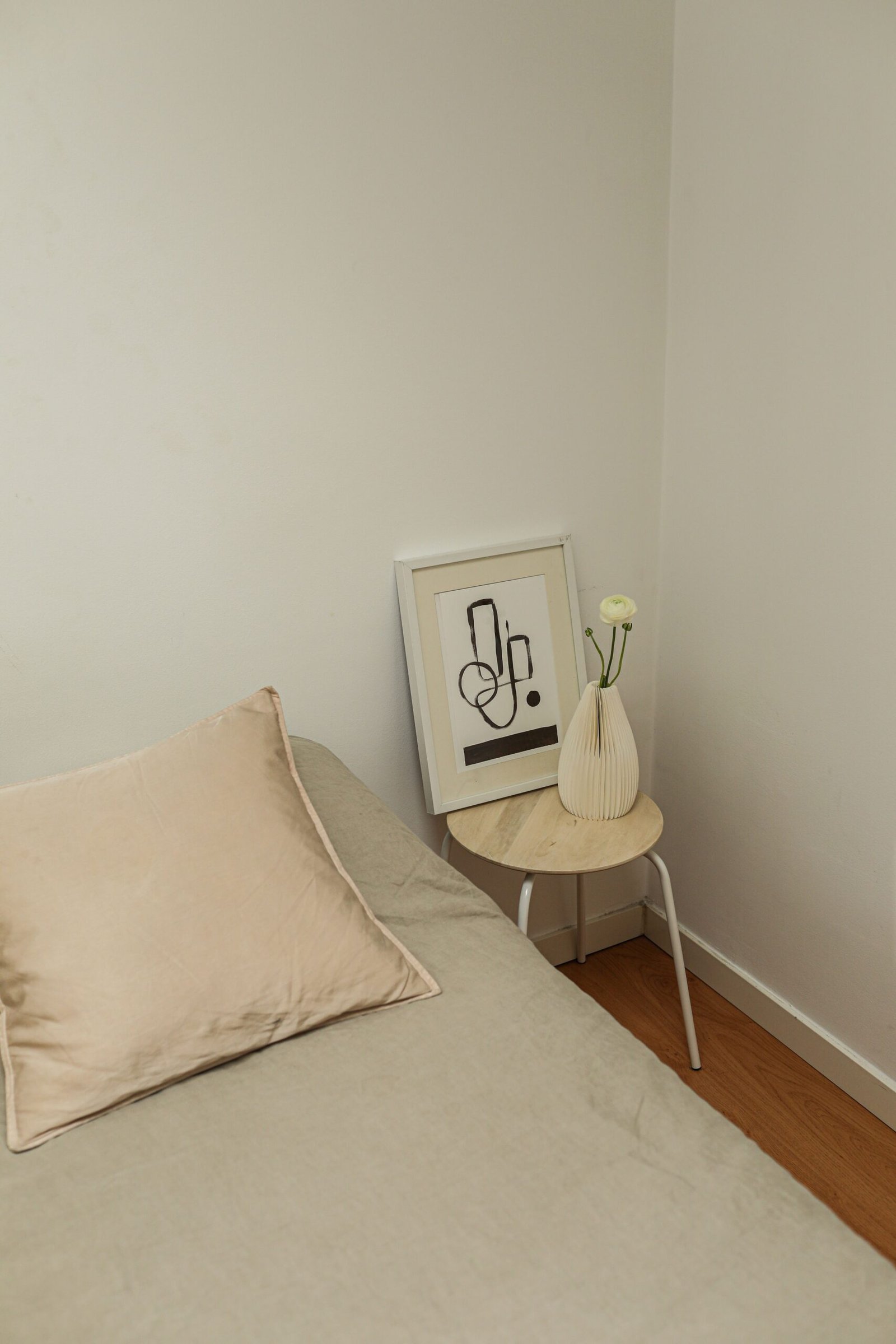
Japandi is one of those style names that sounds more complicated than it is. In plain terms, it is the meeting point of Japanese and Scandinavian design: the calm, natural feeling of a Japanese home combined with the warmth and comfort of a Scandinavian one. The result is a room that feels peaceful without feeling empty, and simple without feeling cold. If you like clean lines, natural materials, and spaces that help you unwind, Japandi is well worth understanding — and it is easier to live with than the photographs sometimes suggest.
This Japandi interior design guide explains the style in practical terms: where it comes from, what defines its palette and materials, how its furniture and surfaces work, and — most importantly — how to make it work for real daily life. It is written for people who want a calmer home, not a showroom. You do not need to replace everything you own, and you certainly do not need to live like a monk to enjoy a Japandi-inspired room.
Where Japandi Comes From, in Plain Terms
Japandi blends two design traditions that, at first glance, come from very different parts of the world, but share a surprising amount in common. Japanese design has long valued simplicity, natural materials, craftsmanship, and the beauty of empty space. A Japanese room traditionally leaves room to breathe: low furniture, sliding screens rather than heavy doors, and a small number of carefully chosen objects rather than shelves full of decoration.
Scandinavian design, meanwhile, grew out of a need to make long, dark winters feel warm and liveable. It values light colours, natural wood, comfortable furniture, and practical, uncluttered rooms. It is functional first, but it never forgets comfort — a Scandinavian room is meant to be lived in, with soft textiles, warm light, and places to sit and linger.
Put those two traditions together and you get Japandi — the basis for most Japandi style home ideas: the restraint and natural calm of Japan, softened by the warmth and cosiness of Scandinavia. Where a purely Japanese-inspired room might feel a little austere, Japandi adds softness — a woollen throw, a comfortable chair, warm lighting. Where a purely Scandinavian room might feel a little busy with cushions and accessories, Japandi edits it back, keeping only what earns its place.
A useful comparison is warm minimalism, which shares Japandi’s love of calm and natural texture but is less tied to Japanese and Scandinavian influences specifically. If you are drawn to the calm side of Japandi but want a slightly softer, more decorated feel, Warm Minimalist Decor Ideas for a Calm, Lived-In Home explores that middle ground in more detail.
The Palette and Materials
Japandi’s palette is calm by design. It is built on warm neutrals — soft whites, warm greys, beige, and stone — with muted earthy accents such as sage, clay, ochre, and soft black. These colours are not chosen to make a statement. They are chosen to recede, so the room feels restful and the natural materials can do the talking. Bright, saturated colours have a small role, if any: a muted terracotta vase or a sage cushion, rather than a bold feature wall.
Materials matter even more than colour in Japandi. Natural materials are the heart of the style, and they are what stop a simple room from feeling flat. Wood is the most important: light woods such as oak, ash, and bamboo for furniture and flooring, sometimes paired with darker walnut for contrast. Stone, rattan, bamboo, linen, cotton, wool, and paper all belong here too. A linen curtain, a rattan lamp, a wool throw, and a wooden table bring far more warmth to a Japandi room than any amount of decoration.
Texture is what gives a Japandi room its depth. Because the colours are muted and the shapes are simple, the room relies on the feel of things: the grain of wood, the weave of linen, the roughness of stone, the softness of wool. Run your hand over the surfaces in a successful Japandi room and they should feel varied and natural, even if the room looks simple from across the room. This is also why quality matters more than quantity here. One well-made wooden bowl, with visible grain and a pleasing weight, does more for a room than five mass-produced ornaments.
Building a Japandi palette in an existing room
- Start with the walls: a warm white or pale warm grey calms a room and gives natural materials a soft background.
- Keep large items neutral, so wood, linen, and stone provide the interest.
- Add muted accents sparingly — sage, clay, or soft black in a cushion or vase is enough.
- Let wood tones vary within the same family; very dark next to very pale can feel jarring.
Mixing wood tones is one of the trickiest parts of a natural palette, because wood is rarely a single colour. Different pieces age differently, and a room can end up with several clashing browns if you are not careful. How to Mix Wood Tones in One Room offers practical guidance on keeping varied woods harmonious, which is directly useful for a Japandi scheme.
Low, Simple Furniture and Clear Surfaces
Japandi furniture is low, simple, and honest. Low here is literal: beds sit closer to the floor, often on a simple wooden platform rather than a tall frame; sofas have low backs and sit on short legs or directly on the floor; tables are lower and simpler than their conventional equivalents. The effect is a room that feels grounded and spacious, because the eye can travel across it without being stopped by tall, bulky furniture.
Clear surfaces are the other half of this section, and they are what most people find hardest. Japandi rooms look calm largely because their surfaces are not crowded. That does not mean you must own almost nothing. It means that what is on display has been chosen, and everything else has a home out of sight. A coffee table with one book and a small vase looks Japandi. The same table covered in remotes, magazines, chargers, and half-finished cups does not, however beautiful the table is.
The practical way to achieve clear surfaces is storage, not willpower. Closed storage — cupboards, drawers, baskets with lids, and boxes inside shelves — is essential in a Japandi home. Open shelving has a place, but it should hold a small number of items with space around them, not every book and object you own. If you are starting from a cluttered room, do not try to clear everything at once. Choose one surface, clear it completely, and live with it clear for a few days. That one calm surface often makes the rest of the room feel more manageable, and it shows you what “clear” actually feels like in your home.
Choosing Japandi furniture without replacing everything
Making Japandi Work for Real Daily Life
Here is where many style guides stop, and where real homes begin. A Japandi room in a photograph has no children, no pets, no laundry, no homework, and no one eating dinner on the sofa. Your home does, and a style that cannot survive daily life is not a good style for daily life. The good news is that Japandi, done thoughtfully, is actually well suited to real living — provided you adapt it rather than copying a photograph literally.
The first adaptation is to accept that clear surfaces need systems, not just tidying. Every household has things that need to live somewhere: keys, chargers, school papers, dog leads, medicines, and all the small items of daily life. In a Japandi home, those things need a designated, closed home near where they are used — a lidded basket by the door, a drawer in the sideboard, a box on a shelf. When everything has a place, putting things away takes seconds rather than becoming a daily battle, and the room stays calm without constant effort.
The second adaptation is about comfort and durability. Choose fabrics that can be washed, wood finishes that can handle a mug without a coaster panic, and rugs that can be cleaned. Linen-look washable covers, a sturdy wooden table, and a rug in a practical weave are all perfectly Japandi, and they will look better after a year of real use than delicate, impractical choices. A calm room is not a fragile room, and treating Japandi as precious is one of the fastest ways to stop enjoying it.
Bedrooms are often the easiest place to start with Japandi, because calm and natural materials suit sleep so well. A low bed, warm neutral bedding in linen or cotton, a wooden bedside table, and one or two plants can transform a bedroom without a major project. Soft, warm lighting in the evening — lamps rather than harsh overhead lights — completes the effect. For more ideas on creating a restful bedroom, Calm Bedroom Ideas for Better Sleep covers lighting, bedding, and layout in practical detail.
Common Japandi mistakes to avoid
- Making the room too bare. Japandi is calm, not empty: if a room feels cold, it usually needs more texture — a throw, a rug, a plant — not less furniture.
- Using cold whites and greys throughout. Without warmth, simplicity reads as clinical; warm neutrals, wood, and soft lighting keep it inviting.
- Buying everything new at once. Japandi works best grown gradually, keeping pieces you love; a room assembled in a weekend often looks like a showroom.
- Forgetting comfort. A beautiful chair you avoid sitting in has failed, however good it looks.
- Treating clear surfaces as a rule rather than a habit. Systems — baskets, drawers, a place for everything — matter more than a single tidy-up.
FAQ: Japandi Design
Is Japandi just minimalism with wooden furniture?
Not quite. Minimalism often aims to own as little as possible, while Japandi aims for a calm, natural feeling, which can include comfortable furniture, soft textiles, and a few well-chosen objects. It is edited and restrained, but warmth and comfort are central, not optional.
Does Japandi work in a small flat?
It works particularly well in small spaces, because low furniture, light colours, and clear surfaces all make a room feel larger. The key is scale: choose furniture that fits the room, keep the palette light, and resist filling every corner. A small flat with one calm, well-planned room often feels more spacious than a larger flat full of furniture.
Is Japandi expensive?
It does not have to be. The style values quality over quantity, which can mean spending more on one good piece, but it also means buying less overall. Keeping furniture you already own, adding natural textiles, and editing what is on display can achieve a Japandi feel without a large budget. Second-hand wooden furniture, in particular, often suits the style beautifully.
How is Japandi different from Scandinavian design on its own?
Scandinavian design is warmer and often more decorated, with more colour, pattern, and accessories. Japandi takes Scandinavian comfort and adds Japanese restraint: fewer objects, more empty space, lower furniture, and a stronger emphasis on natural materials and craftsmanship. Think of it as Scandinavian warmth, edited with a Japanese eye.
Conclusion
Japandi interior design, at its best, is not about achieving a perfect look. It is about creating rooms that feel calm, natural, and practical — rooms where natural materials, simple furniture, and clear surfaces support daily life rather than getting in its way. Borrow the palette, the materials, and the restraint, adapt them to your home and the people in it, and let the style grow gradually — Japanese Scandinavian decor at its most liveable, and calm natural interior design for everyday routines. A calmer home is a worthwhile goal, and Japandi offers a practical, beautiful way to get there.
1 thought on “Japandi Interior Design: Calm, Natural and Practical”