
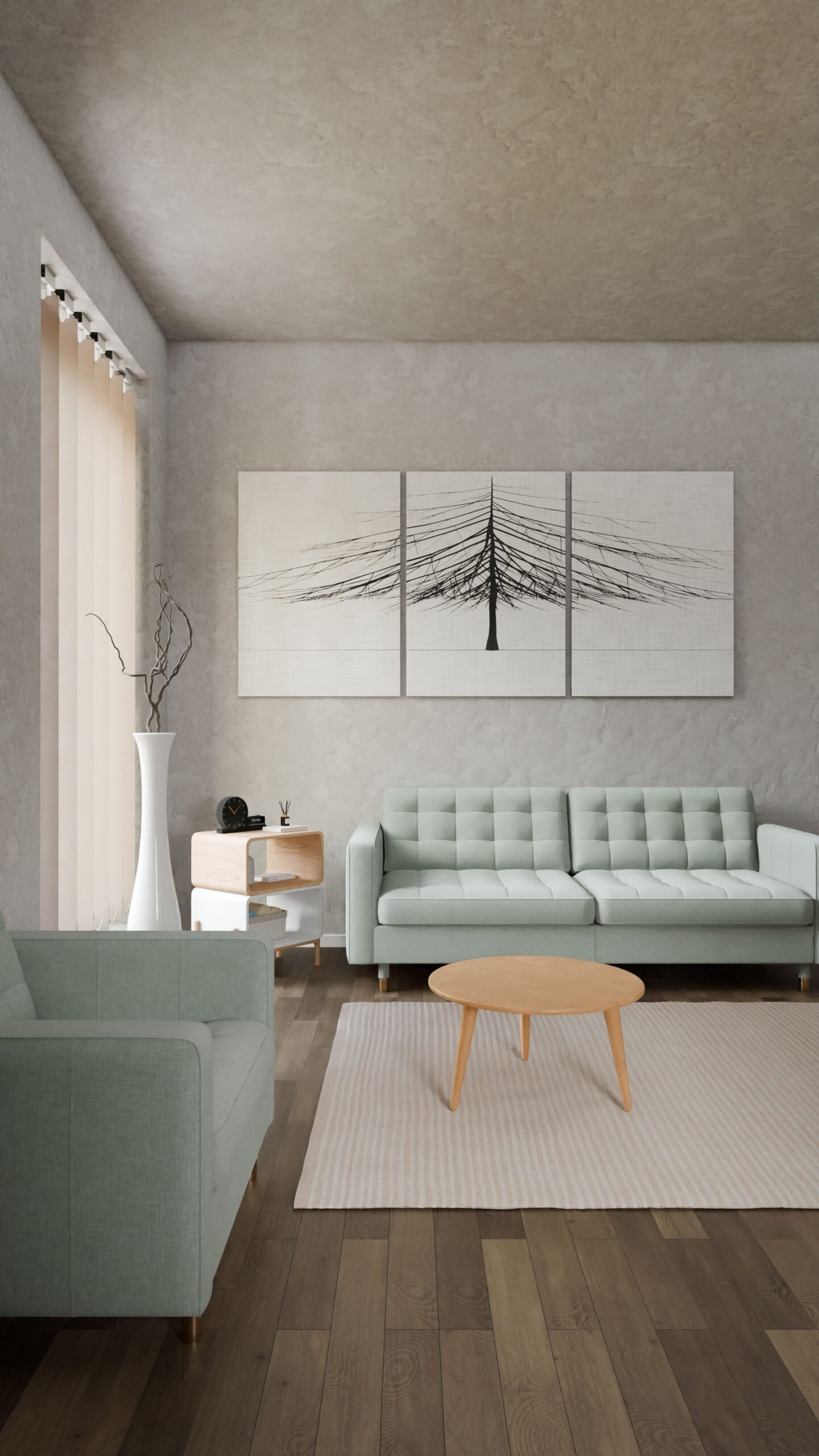
Walk into a room that feels right and it is hard to say exactly why. Nothing looks obviously expensive or dramatic, yet everything seems to sit comfortably together. Walk into a room that feels slightly off and it is just as hard to explain: the sofa is lovely, the colours are pleasant, but something feels crowded, or empty, or awkward to move around in. Very often, the difference is not taste or budget. It is proportion, balance and flow — three quiet principles that shape how a room works long before anyone notices the cushions or the paint colour.
These principles sound like the language of professional designers, but they are really just everyday decisions made visible. Proportion is about size: whether a piece of furniture fits the room it is in. Balance is about weight: whether one side of a room feels heavier than the other. Flow is about movement: whether you can get around easily, reach what you need, and use the room without constantly stepping around something. Once you can spot those three ideas, decorating becomes much less mysterious. You stop asking whether a piece is beautiful in isolation and start asking whether it is beautiful in this room, in this place, next to these other things.
Proportion: Right Size for the Room
Proportion is the relationship between the size of things in a room and the size of the room itself, as well as the relationship between the pieces themselves. A dining table that seats eight can be a wonderful thing in a generous dining room and a constant obstacle in a small kitchen-diner. A tiny rug in a large living room can make even a comfortable sofa look adrift, while a very large rug in a small room can make the floor disappear and the room feel smaller. The furniture has not changed; the context has.
A helpful way to think about proportion is to look at the largest pieces first, because they set the scale for everything else. In a living room, that is usually the sofa. In a bedroom, it is the bed. In a dining area, it is the table. If the largest piece is too big, every other decision becomes a compromise: walkways narrow, doors feel blocked, and smaller pieces look lost beside it. If the largest piece is too small, the room can feel unfinished, no matter how carefully the accessories are chosen. Getting that anchor piece roughly right makes the rest of the room much easier to arrange.
One of the most common proportion mistakes is buying for the shop rather than for the home. Furniture in a large showroom, under bright lights and surrounded by empty floor, almost always looks smaller than it will look at home. Measuring first, and checking the piece against the room rather than against other pieces in the shop, helps avoid that surprise. Planning the layout before buying is just as important as choosing the style, which is why it is worth reading How to Plan a Room Layout Before Buying Furniture before committing to a large purchase.
Balance: Symmetry and Asymmetry
If proportion is about size, balance is about visual weight. Visual weight is not the same as actual weight. A dark, solid bookcase can feel heavier than a pale sofa of the same size. A tall plant can balance a floor lamp even though they are completely different objects. A large expanse of empty wall can feel light, while a wall covered in small, busy frames can feel heavy. Balance is the sense that the weight in a room is distributed in a way that feels settled rather than lopsided.
Symmetry is the most familiar kind of balance. It means mirroring: two matching bedside tables, two lamps, two cushions placed in the same way on either side of a sofa. Symmetry feels calm, formal and orderly, which is why it works so well in bedrooms and in rooms where rest is the priority. It is also forgiving for beginners, because the eye immediately understands the pattern. If a room feels unsettled, adding a matching pair somewhere — not everywhere — can often bring it back into balance.
Asymmetry is balance without mirroring. Instead of identical objects, you use different objects with a similar visual weight. A tall floor lamp on one side of a sofa might be balanced by a stack of books and a plant on the other side. A large piece of art on one wall might be balanced by a grouping of smaller frames on the opposite wall. Asymmetry feels more relaxed and natural, and it suits living rooms and family spaces where perfect pairs might feel too formal. It takes a little more judgement than symmetry, because you are comparing feeling rather than matching objects, but it also allows a room to look collected over time rather than bought all at once.
Flow: How You Move Through a Room
Flow is about how you move through a room and how easily you can use it. A room with good flow lets you walk from the door to the window, to a seat, to a cupboard, without detouring around furniture, turning sideways, or apologising to other people for blocking their path. A room with poor flow might look fine in a photograph but feel frustrating to live in, because every everyday task involves a small negotiation with the furniture.
Long or awkwardly shaped rooms deserve special attention here, because their natural paths are less obvious and it is easy to push all the furniture against the walls and leave a corridor down the middle. Breaking a long room into zones — a seating area at one end and a reading or work area at the other, for example — often improves flow rather than harming it, because each zone has its own clear purpose and its own comfortable routes. For ideas on handling those shapes, see Living Room Layout Ideas for Awkward Long Rooms.
Ways to improve flow without buying anything
- Clear the main path first. Remove anything that sits in the route from door to seat, and see how the room feels before rearranging anything else.
- Turn furniture slightly rather than moving it far. Angling a chair or shifting a table by a small amount can open a walkway that felt blocked.
- Make sure doors, drawers and cupboards can open fully. A beautiful storage unit is not useful if its doors cannot swing open without hitting something.
- Keep the centre of a room usable, not just passable. A clear walkway that leads nowhere useful still feels like wasted space.
Putting the Three Together in One Room
Imagine a typical living room. Start with proportion: choose a sofa that fits the wall it sits against, leaving visible wall on either side rather than filling the wall exactly. Add a coffee table that can be reached from the sofa without stretching, and a rug large enough to sit under the front legs of the main seats, so the seating area feels like one connected group rather than separate pieces floating on the floor. Already, the room will feel more settled, because the main pieces relate to each other and to the room.
Clutter affects all three principles at once, which is why a room can feel out of proportion, unbalanced and hard to move through even when the furniture itself is well chosen. Extra objects add visual weight, block walkways, and make correctly sized furniture look crowded. If a room feels off and you cannot pinpoint why, try removing a few non-essential items before changing the furniture. Guidance on clearing that kind of visual noise can be found in Common Decorating Mistakes That Make a Room Feel Cluttered, and it often reveals that the underlying layout was sound all along.
FAQ: Interior Design Basics
What is the easiest interior design principle for a beginner to learn first?
Proportion is usually the easiest place to start, because it is the most practical. Before worrying about style, check whether furniture fits the room and relates sensibly to the pieces around it. Measuring, marking a footprint on the floor, and looking at the room from the doorway will already prevent many common mistakes, and those habits are useful in every room you decorate afterwards.
Does every room need to be symmetrical to look balanced?
No. Symmetry is one way to create balance, but asymmetry can be just as balanced and often feels more relaxed. The key is visual weight: different objects can balance each other if they carry a similar sense of presence. A tall plant can balance a floor lamp, and a group of smaller frames can balance one large piece of art. Most lived-in rooms mix both approaches.
How do I know if a sofa is too big for my living room?
Look beyond whether it physically fits against the wall. Check whether you can walk comfortably around it, whether other seats and tables still have room to breathe, and whether the sofa leaves visible wall and floor around it. If the room feels dominated by one piece, or if everyday movement becomes awkward, the sofa is probably too large for that particular room, however comfortable it may be on its own.
Can I improve flow without rearranging all my furniture?
Yes, often with small changes. Clearing the main path from the door, angling a chair slightly, moving a side table a short distance, or removing one item that blocks a walkway can transform how a room feels. Watch how people actually move through the room for a few days, and adjust the spots where movement consistently feels tight or awkward.
Where can I learn more about interior design principles?
A good starting point for background reading is the Britannica overview of interior design, which explains the history and scope of the subject in general terms. For practical application, though, the most useful learning comes from looking closely at rooms you enjoy, noticing their proportion, balance and flow, and trying small adjustments in your own home.
Conclusion
Proportion, balance and flow are not about achieving a perfect room, and they are not a test to pass before you are allowed to enjoy decorating. They are simply three lenses for looking at a space: is it the right size, does it feel settled, and is it easy to move through? When those three questions have comfortable answers, the rest of decorating — colour, texture, pattern and personal objects — has a solid foundation to build on. Start with one room, make one small change, and notice how it feels to live in afterwards. That feeling, more than any rule, is the real measure of whether the principles are working for you.
3 thoughts on “Interior Design Basics: Proportion, Balance and Flow Explained Simply”